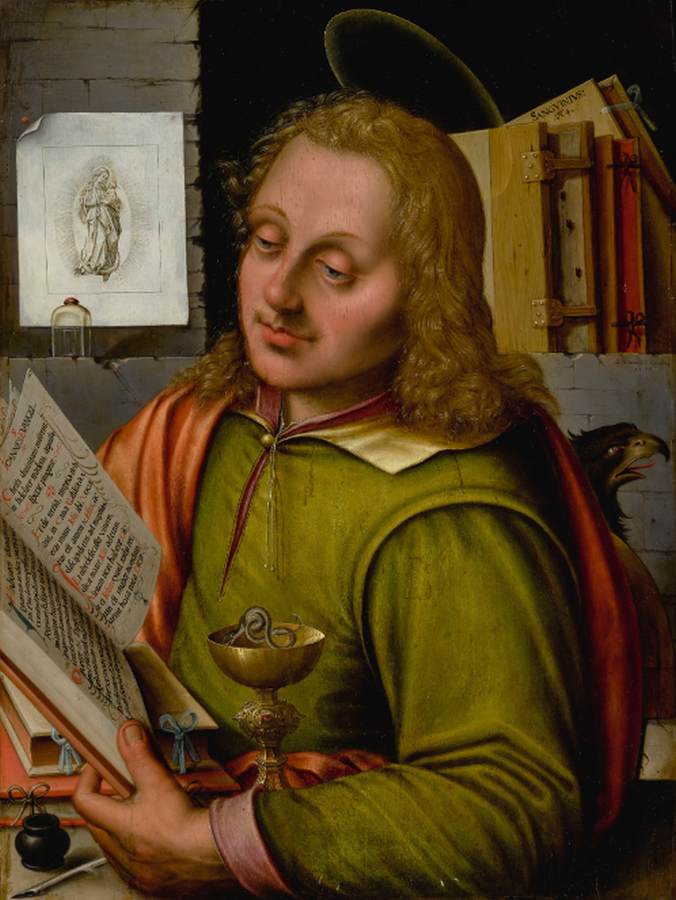
Georg the Younger Gärtner
1577 – 1654
German painter and engraver. The son of the artist Georg Gärtner the Elder (d. 1612), he probably worked with his father until 1612. He executed 44 signed plates illustrating the Funeral Procession of Margrave Frederick of Brandenburg (1613; British Museum, London) and also helped illustrate B. Beseler's natural science compendium, the Hortus Eichstettensis (Nuremberg, 1613; complete copy, Nuremberg, Stadtbibliothek), which he signed appropriately in Latin as 'Georg Hortulanus'. On 8 April 1613 Nuremberg city council commissioned him to work alongside Gabriel Weyer, Paul Juvenel I and Jobst Harrich to restore the wall paintings designed by Dürer for the Nuremberg Rathaussaal (destroyed 1945). This restoration was undertaken first in 1613-14, then in a second phase in 1619. Gärtner's contemporaries praised him as 'felicissimus Düreri imitator', and after the death of Hans Hoffmann in 1591-92 he became the leading Dürer copyist. Unlike other Dürer copyists such as Hoffmann, Gärtner does not seem to have painted in a contemporary 17th-century style, on the evidence of his surviving autograph works. His copy of Dürer's Man of Sorrows (1512) provides a valuable record of this untraced painting, displaying Dürer's fine and delicate treatment of the beard and hair. Gärtner also combined various figures from different compositions including drawings and prints in order to create his own 'Dürer-style' version, as, for example, in a drawing of the Man of Sorrows (Albertina, Vienna). Apart from the drawings and copies after Dürer, some paintings by Gärtner on copper in a Düreresque style are known. For example the small painting of the Circumcision (private collection) displays Düreresque figures such as the Virgin in the background, closely based on Dürer's Family of St Anne (c. 1514; Metropolitan Museum of Art, New York), although the composition is taken from an engraving of the Circumcision (1594).
View all works →