Artemisia Gentileschi
1593 – 1653
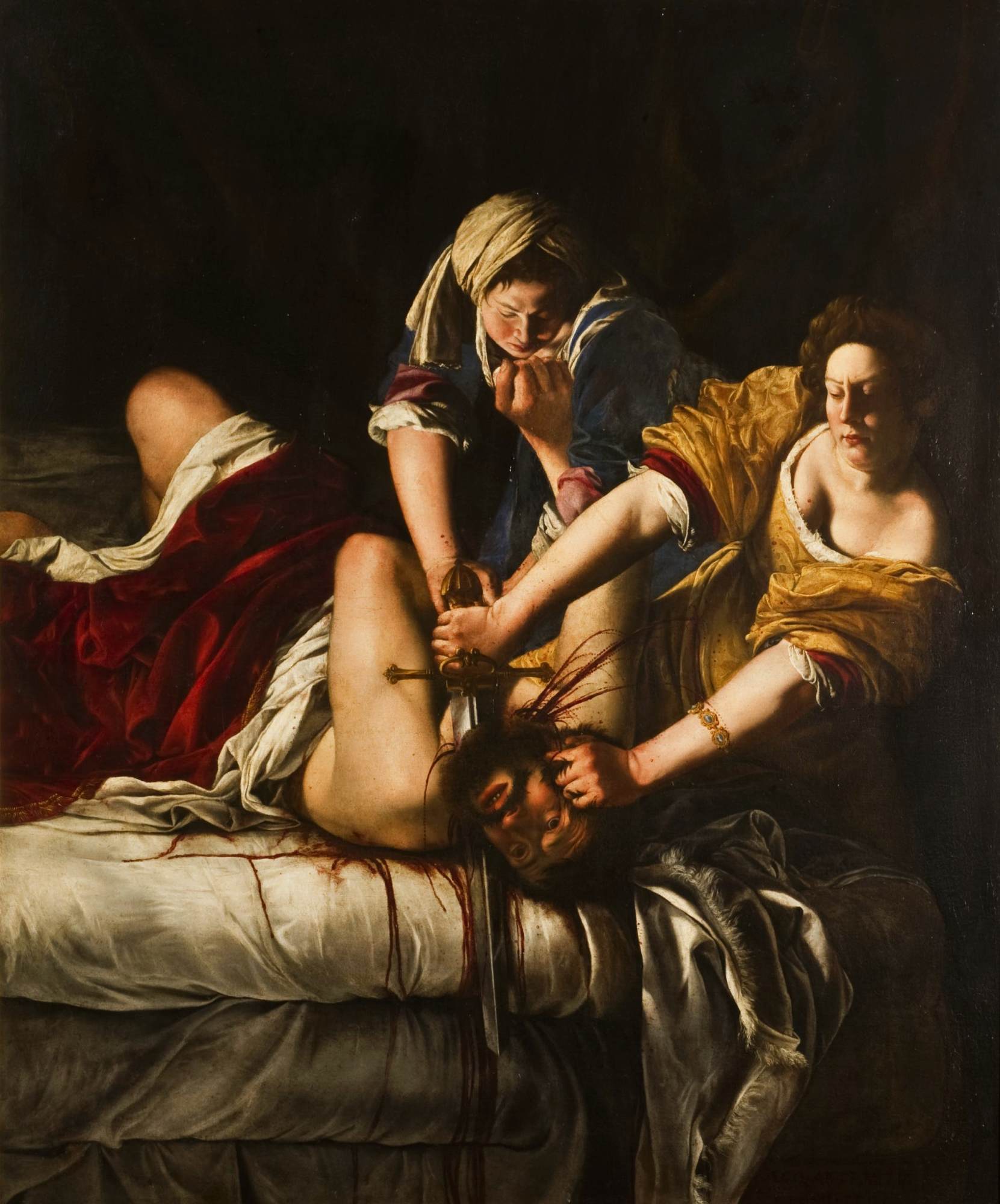
Artemisia Gentileschi, the daughter of Orazio Gentileschi (1563-1639) was one of the greatest of Caravaggesque painters and a formidable personality. She was precociously gifted, built up a European reputation, and lived a life of independence rare for a woman of the time. Born in Rome, she worked mainly there and in Florence until she settled in Naples in 1630 (she also visited her father in England in 1638-40). In 1610 she painted her first extant signed and dated work, Susanna and the Elders. In February or early March 1612, Agostino Tassi, employed as Artemisia's perspective teacher, was accused of raping her and subsequently tried and imprisoned. In July Orazio wrote to the Grand Duchess of Tuscany vaunting Artemisia's artistic prowess and requesting the enforcement of Tassi's sentence. Perhaps to mitigate her plight, at the end of that year she married the Florentine Pierantonio Stiattesi, left Rome and moved to the Tuscan capital. The dating of some of her most celebrated early paintings remains controversial. These include Judith Beheading Holofernes (Naples and its later variant in the Uffizi, Florence), a response to Caravaggio's canonical interpretation of the subject, Lucretia (Pagano Collection, Genoa) and Judith and her Maidservant (Galleria Palatina, Florence). Artemisia signed herself Lomi, her father's real surname, on Florentine works such as Gael and Sisera (1620, Museum of Fine Arts, Budapest). Highly regarded, she joined the Accademia del Disegno in 1616 as its first female member. Baldinucci's brief biography describes her prolific activity as a portraitist, though few examples have survived. In 1620 she wrote to Cosimo II de' Medici informing him of a proposed trip to Rome and is documented there in 1621 and again between 1622 and 1626. By 1627 she was in Venice but later moved to Naples where she signed her earliest securely datable Neapolitan work, the Annunciation (1630, Museo di Capodimonte, Naples). It seems she lived there until her death, except for a sojourn in England in 1638 to assist her elderly father.
View all works →