Orazio Gentileschi
1563 – 1639
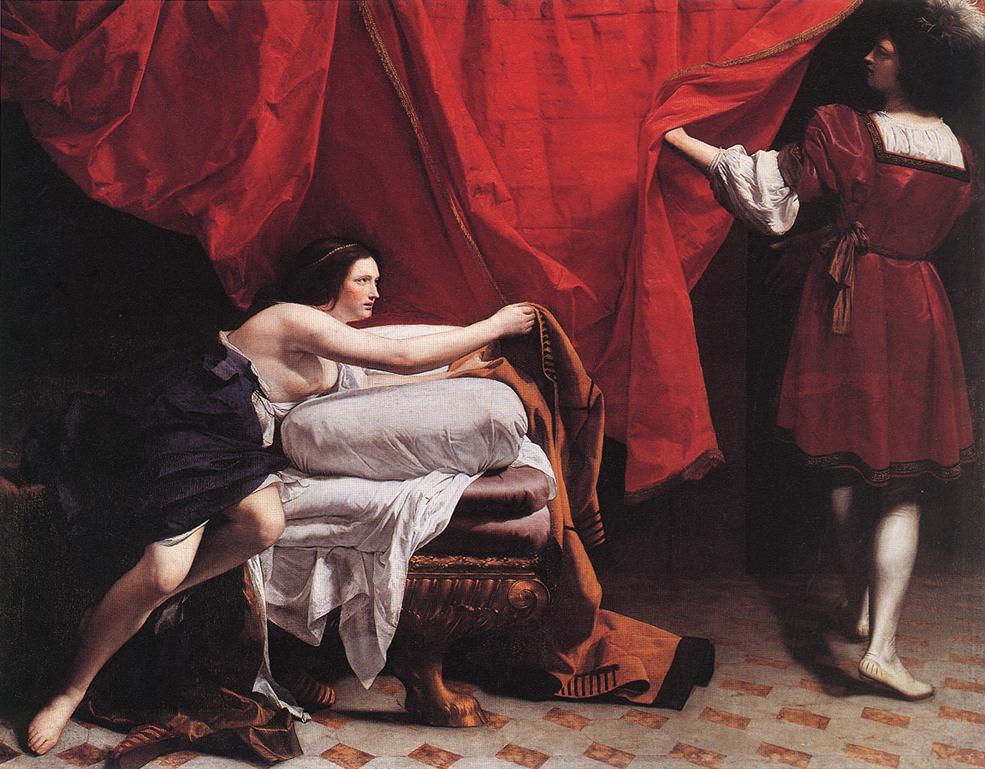
Italian painter, originally Orazio Lomi, he was born in Pisa, but in about 1576 he settled in Rome. Coming from a family of artists, whose tradition was continued by his brilliant daughter Artemesia, Orazio Gentileschi trained in one of his uncles' studios in Rome. His own career, however, was slow in starting and he was almost 40 before it really got underway. Then in the first decade of the seventeenth century friendship with Caravaggio brought about a sudden change. After working in a Mannerist style he became one of the closest and most gifted of Caravaggio's followers. He was one of the few Caravaggisti who was a friend of the master, and in 1603 he and Caravaggio and two other artists were sued for libel by Giovanni Baglione. Gentileschi's work does not have the power and uncompromising naturalism of Caravaggio, tending rather towards the lyrical and refined. His graceful figures are stately and clearly disposed, with sharp-edged drapery-qualities recalling his Tuscan heritage of superb elegance and draughtsmanship. After a decade working in Rome, in about 1612 Gentileschi settled in the Marches where he painted a number of altarpieces and frescos for Fabriano cathedral. In 1621 a nobleman called Sauli invited him to Genoa. This was the start of the extraordinary international success he enjoyed with several aristocratic patrons. They commissioned canvases for their collections and Gentileschi often produced the same composition in more than one version. While in Genoa he painted an Annunciation (Galleria Sabauda, Turin) that is often considered his masterpiece. After meeting the Savoy ducal family, in 1624 Orazio Gentileschi left for Paris where he worked until 1626 for Marie de' Medici. He then moved to London where he settled and became court painter to Charles I. He remained there until he died. His travels were a factor in spreading the Caravaggesque manner, but by the end of his career he had long abandoned heavy chiaroscuro in favour of light colours. He was much admired by the English court and private collectors for the now much lighter-toned and very enjoyable quality of his canvases, and he painted the ceilings for the Queen's House at Greenwich, now in Marlborough House, London.
View all works →