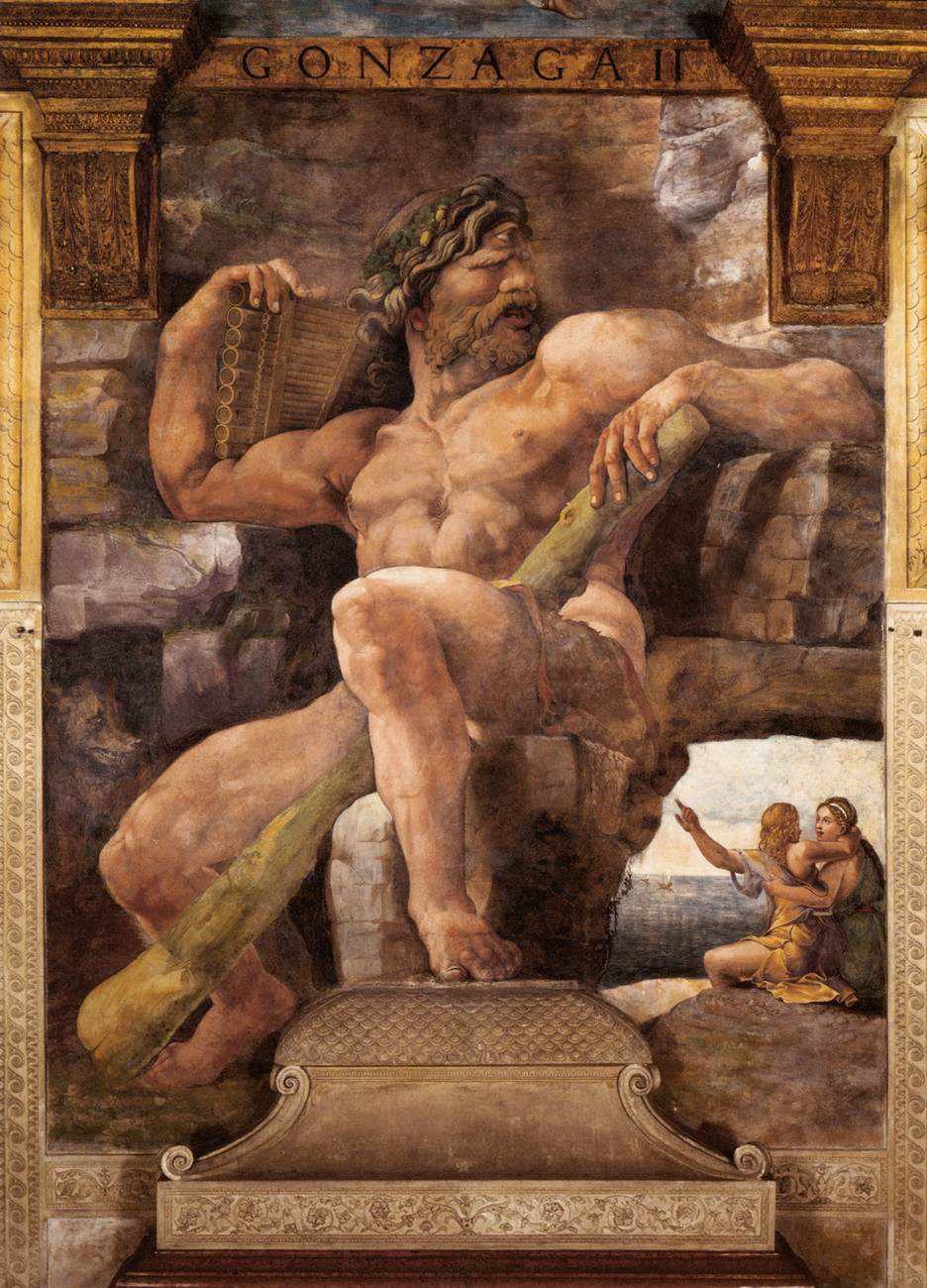
Giulio Romano
1499 – 1546
Italian painter and architect (original name Giulio Pippi, in full Giulio di Pietro di Filippo de' Gianuzzi). He was the principal heir of Raphael, and one of the initiators of the Mannerist style. Giulio was apprenticed to Raphael as a child and had become so important in the workshop that by Raphael's death, in 1520, he was named with Giovan Francesco Penni as one of the master's chief heirs; he also became his principal artistic executor. After Raphael's death, Giulio completed a number of his master's unfinished works, including the Transfiguration and the frescoes Battle of Constantine and Apparition of the Cross in the Vatican Palace, Rome. In his original work from these years, such as the Madonna and Saints (c. 1523) and the Stoning of St. Stephen (1523), Giulio developed a highly personal, anticlassical style of painting. He inherited a portion of Raphael's wealth, including his works of art, and succeeded him as head of the Roman school. About 1524, Giulio accepted the invitation of Federigo Gonzaga, ruler of Mantua and patron of the arts, to carry out a series of architectural and pictorial works. The drainage of the marshes surrounding the city and its system of protection from the inundations of the Po and Mincio rivers attest to Giulio's skill as an engineer; his genius as an architect found scope in the planning and construction of the Palazzo del Tè, the cathedral, the streets, and a ducal palace. Among his works of this period are the frescoes in the Sala di Psyche and Sala dei Giganti in Palazzo del Tè.
View all works →