FINDART

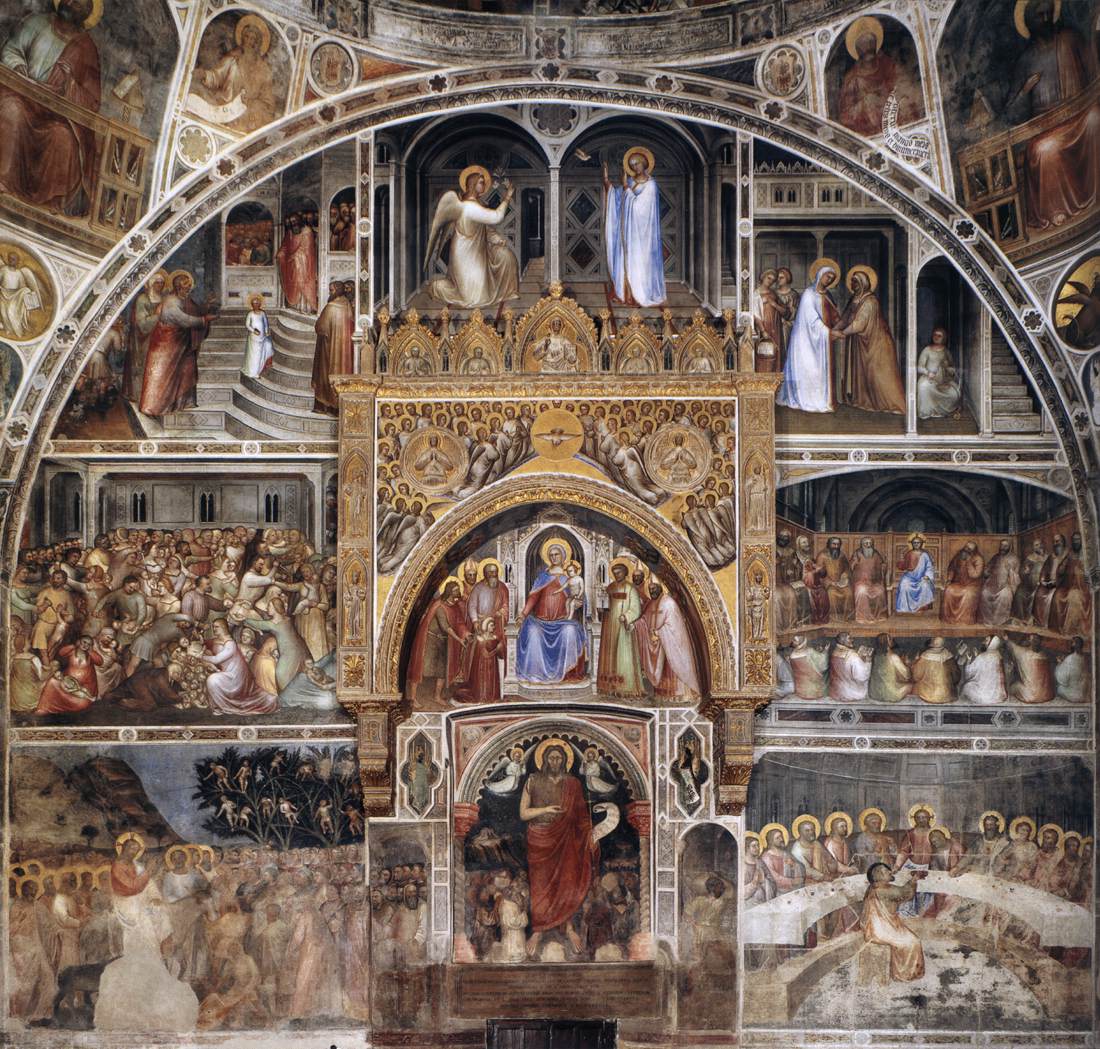
Scenes from the Life of Christ (west wall)

1378 · Baptistery, Padua

religious

On the four walls of the main space of the Baptistery the story of John the Baptist and scenes from the life of Christ are represented. These walls depict, on the south side, the life of John the Baptist, and on the opposite side, the life of Christ, which in part overlaps with the life of the Baptist. On the west wall the following scenes are depicted: Presentation of the Virgin (top left), The Annunciation (top middle), The Visitation (top right), Massacre of the Innocents (middle left), votive image with the donor Fina Buzzacarini (middle), Christ among the Doctors (middle right), Christ's Entry into Jerusalem (bottom left), St John the Baptist (bottom middle, this figure is of a later date), The Last Supper (bottom right).
Loading map…
Scenes from the Life of Christ (west wall)

About the Artist

Giusto De' Menabuoi

13201391

Italian painter, complete name Giusto di Giovanni de' Menabuoi, also called Giusto Padovano or Giusto Fiorentino. He was a native of Florence, but all records of his activity and all surviving works are in or from northern Italy. Possibly trained under Bernardo Daddi or Maso di Banco, he was an imitator of Giotto. Together with the Veronese painter Altichiero, and following in the wake of the native Guariento, Giusto helped establish Padua as a major centre for the development of late 14th-century painting. His work illustrates the widening stylistic gulf in the years following the Black Death between the activities of Florentine painters working in Florence and those of artists either born there or exposed to the influence of Florentine art before the mid-century, but working further north, where, after c. 1350, the most significant developments of the Giottesque legacy took place. Beyond a shared Florentine tendency to monumental form, his art increasingly diverged from the style of Orcagna and his school, and Giusto’s expansion of the pictorial possibilities suggested by Giotto, Maso di Banco and Taddeo Gaddi in the early decades of the century is bolder than anything attempted by the painters of late 14th-century Florence. His career may be divided into two phases: work in Lombardy, 1350s and 1360s; and from c. 1370 in Padua, where he enjoyed the patronage of the Carrara court. In Padua he painted numerous frescoes, which probably must be attributed in part to his pupils Giovanni and Antonio da Padua.

View all works →