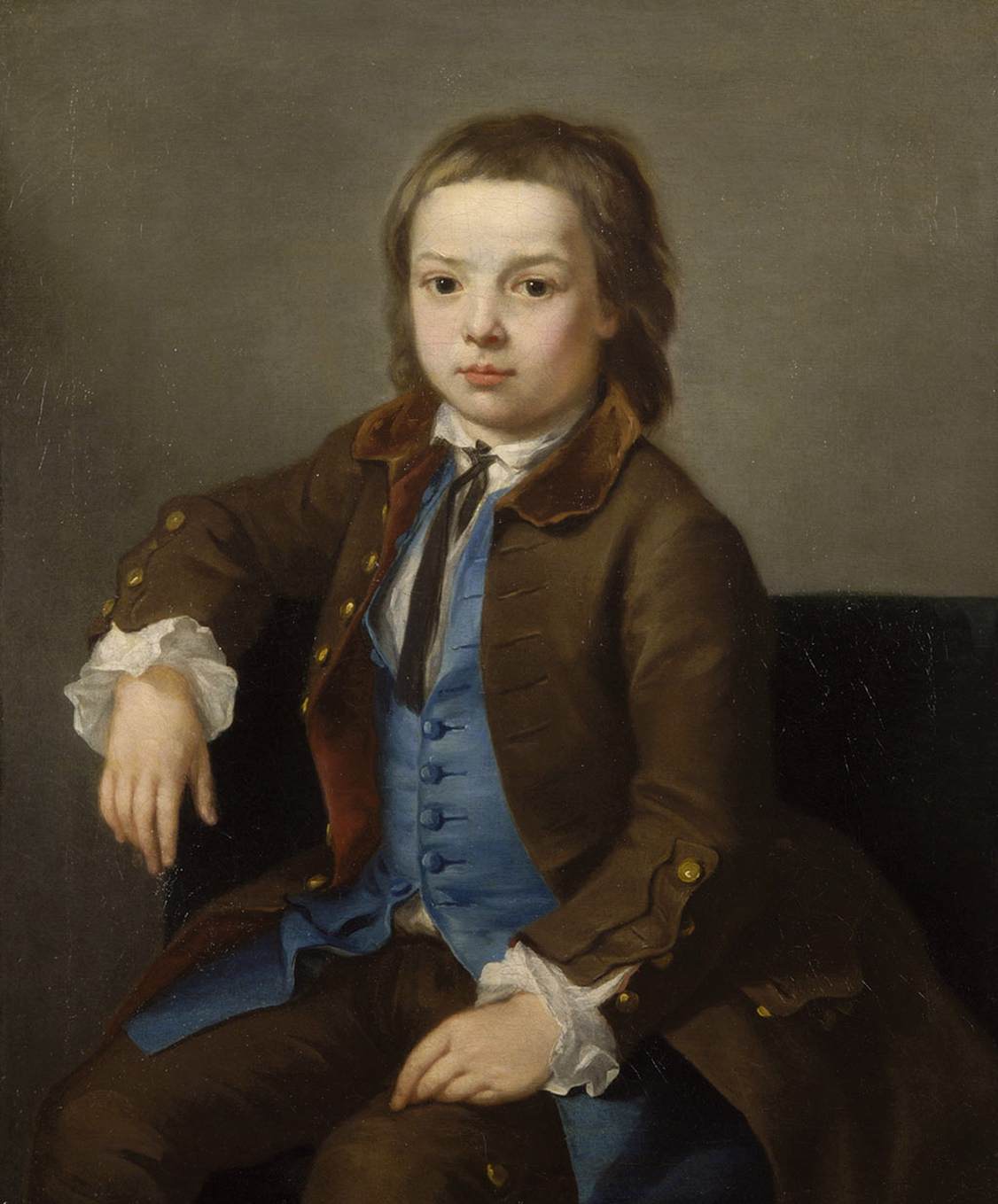
Nathaniel the Elder Hone
1718 – 1784
Irish portrait and miniature painter. He was raised in Dublin in a Dutch family whose family tree includes several renowned artists. His father, uncle to the portrait painters Horace Hone (1756-1825) and John Camillus Hone (1759-1836), as well as the great-great-great grand-uncle of Evie Hone (1894-1955) was a Dublin-based merchant. His son was great grand-uncle of Nathaniel Hone the Younger (1831-1917). Nathaniel the Elder moved to England as a young man, married in 1742 and settled in London. He must have studied drawing and fine art painting during his teenage years in Dublin, or perhaps at one of the art schools in London, since he soon built up a significant reputation as a popular portraitist. In addition to his skill at portrait art, Nathaniel the Elder was a consummate miniaturist and enamel painter. In 1750, he furthered his study of Renaissance art, painting techniques and the Old Masters, during a two-year spell in Italy. Later, in 1768, he was elected one of the founder members of the Royal Academy (RA). Then, in 1775, he became embroiled in controversy after executing "The Conjurer", a satirical picture seemingly ridiculing the fashion for Italian Renaissance art as well as Sir Joshua Reynolds. The work was duly rejected by the Royal Academy. In response, Nathaniel Hone staged a one-man retrospective for himself in the capital - something which no London artist had enjoyed up until that time. His paintings are represented in several public collections of Irish art in the Republic, as well as in the National Portrait Gallery in London.
View all works →