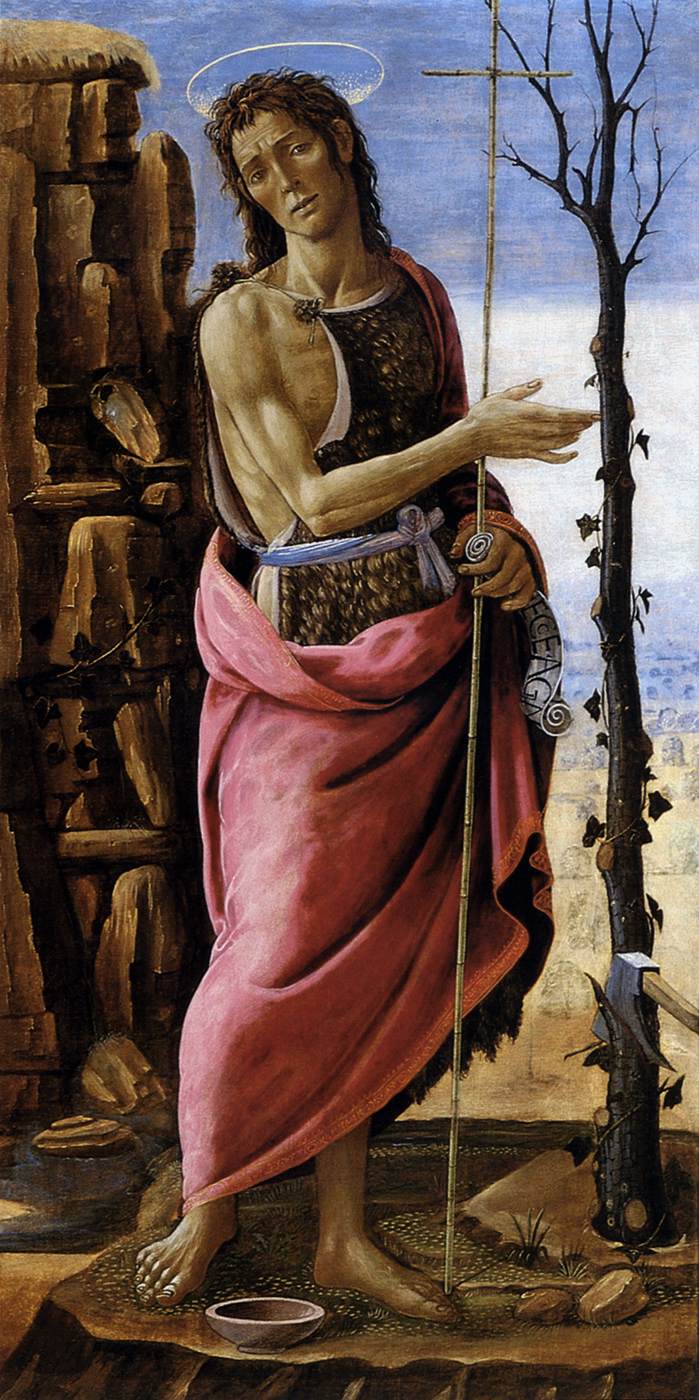
Jacopo Del Sellaio
1441 – 1493
Italian painter, originally Jacopo di Arcangelo di Jacopo. He was the son of Arcangelo, a saddler (sellaio). He is first mentioned in his father's catasto (land registry declaration) of 1446 as a child of five. By 1460 he had joined the Compagnia di S Luca in Florence, and in October 1473 he appears in their records sharing a studio with Filippo di Giuliano (fl 1473-91). Vasari describes both Sellaio and Botticelli as fellow pupils of Fra Filippo Lippi. His first documented commission, of 10 December 1477, was for two panels with an Angel Annunciate and a Virgin Annunciate for S Lucia dei Magnoli in Florence (in situ). For the same church he was asked to clean and restore a painting of St Lucy (in situ) usually attributed to Pietro Lorenzetti. He produced two altarpieces for San Frediano: the now-lost Pietà (formerly in the Kaiser Friedrich Museum, Berlin) is first mentioned in documents of 1483 and completed posthumously; it remained unfinished at the artist's death and was completed by the painter's son, Arcangelo; and the The Crucifixion with Saint Lawrence, now in the seventeenth-century church of San Frediano in Cestello, Florence, is probably one of the artist's last major commissions, dating to c. 1490. Jacopo specialized in small devotional panels of individual religious figures, most often such hermit saints as Jerome and John the Baptist. These, together with his narrative depictions, constitute his most successful and abundant output, but all are undocumented. Sellaio's paintings show a brittle, linear technique and a light, pastel palette, clearly indebted to Botticelli.
View all works →