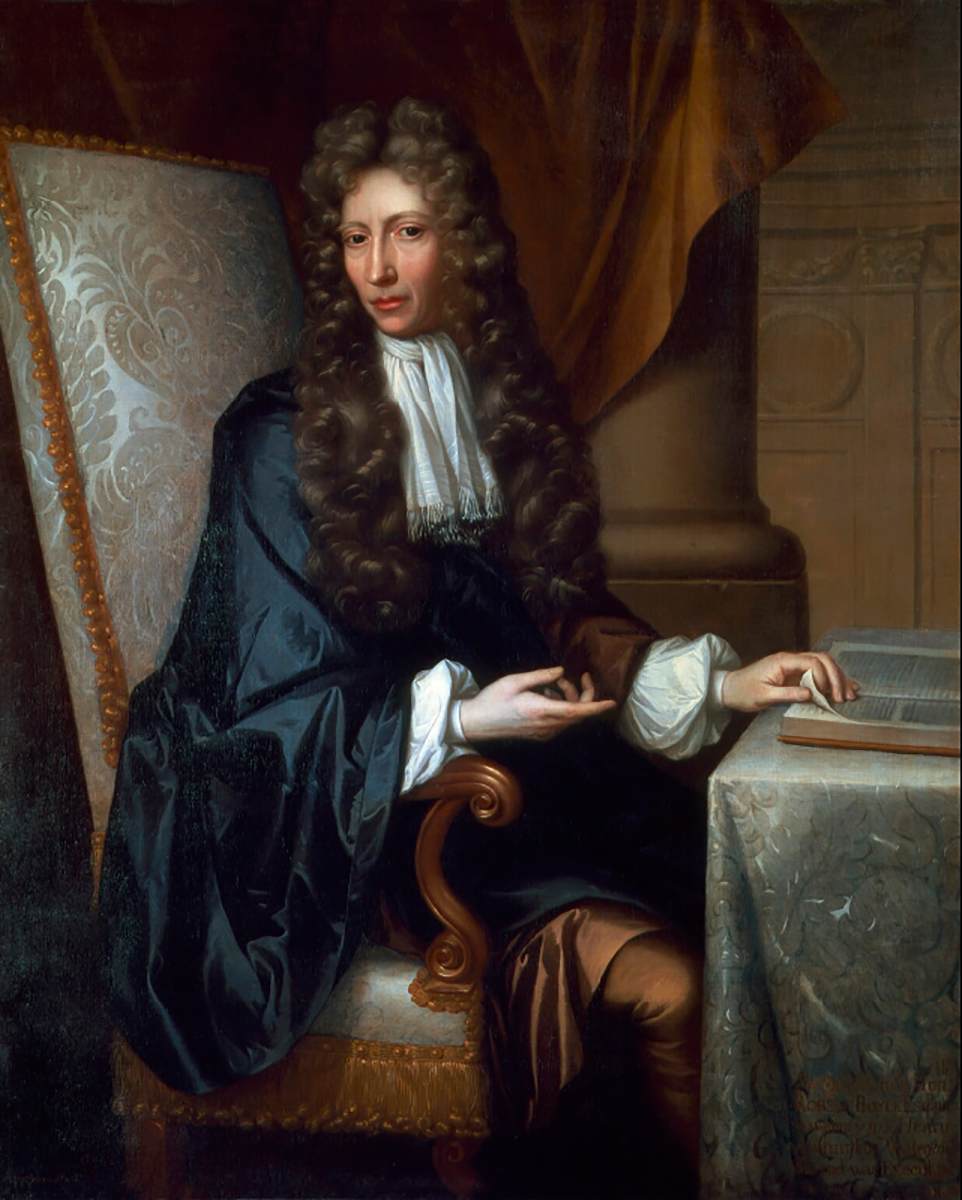
Johann Kerseboom
? – 1708
German painter, part of a family of painters, nephew of Friedrich Kerseboom. He first worked in Germany, where his sitters included the Electress Sophia Dorothea; the painting (untraced) is known from an engraving (London, British Museum) by William Faithorne, who also executed six mezzotints after him. In 1689 Kerseboom painted the prototype of the Hon. Robert Boyle (c. 1689; London, Royal Society), of which numerous versions exist; this portrait is one demonstration of his idiosyncracies: the long, angular face, the extended figures and an emphasis on accessories. Kerseboom worked closely with other artists, most notably with Jan van der Vaardt (c. 1653-1727), who often provided drapery and backgrounds as he had earlier done for Willem Wissing (c. 1656-1687). Portraits were sometimes jointly signed, and their individual styles are difficult to disentangle. The team perpetuated the Wissing tradition, although Kerseboom favoured warmer and more varied colours. An early work such as Lady Grace Carteret (Petworth House, W. Sussex,) is barely distinguishable from a late Wissing, and Kerseboom's portraits of women and young children, such as the Hon. James Thynne (c. 1692; Longleat House, Wilts), were often merely decorative. On the other hand, his later male portraits are often sympathetic and robust: the full-length Thomas Osborne, 1st Duke of Leeds (1704; London, National Portrait Gallery), signed by both artists, aptly conveys Kerseboom's sympathetic observation, while it is also a fine example of the grand 'parade' portrait.
View all works →