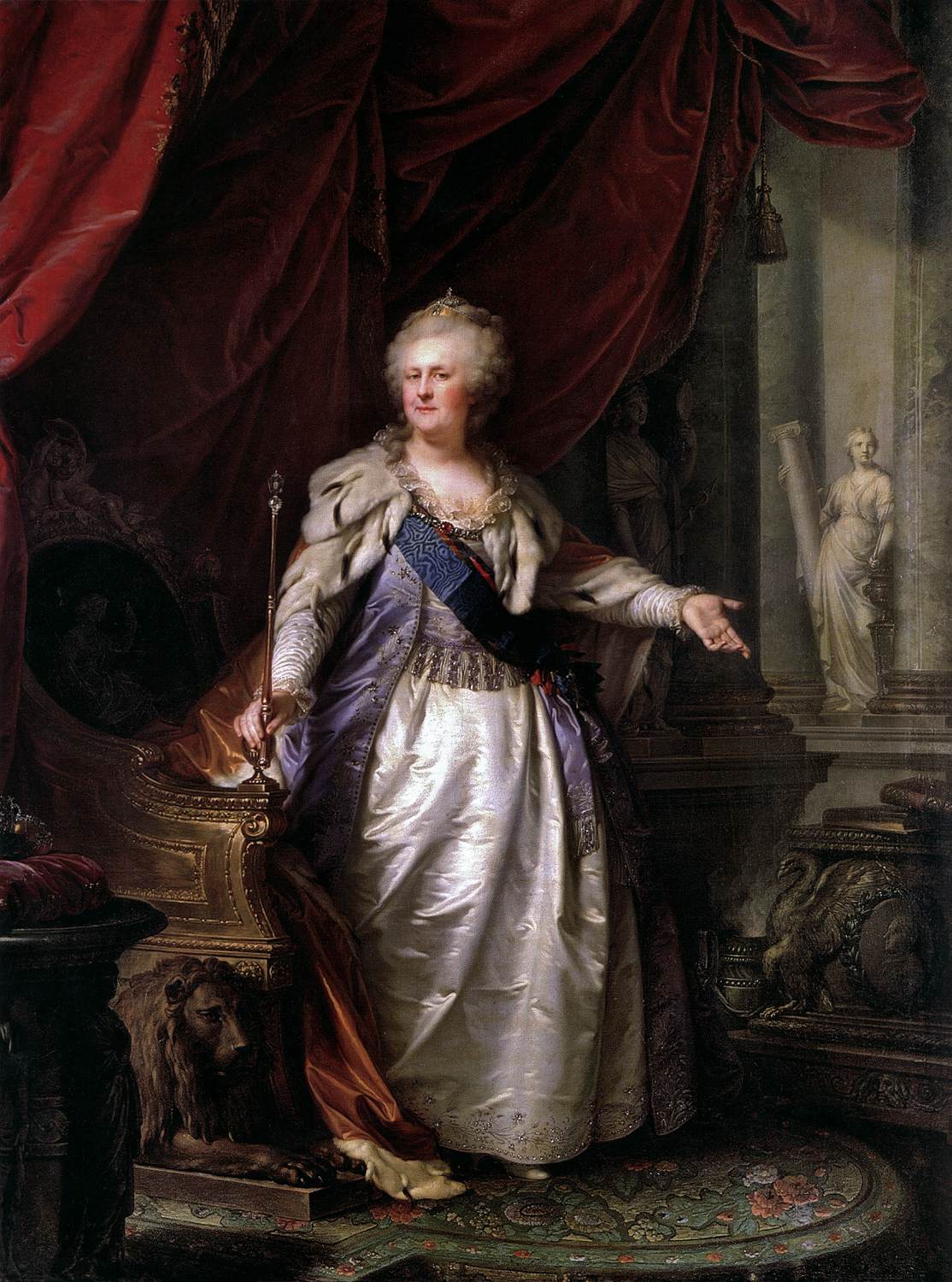
Johann Baptist I Lampi
1751 – 1830
Austrian historical and portrait painter, born at Romeno, today in the Italian Province of Trento. After early training with his father, he went to Salzburg (1768-70) to study with his mother's brother Peter Anton Lorenzoni (1721-82), who painted altarpieces. In Salzburg he probably also received instruction in historical and portrait painting from Franz Xaver König (1711-82) and Franz Nikolaus Streicher (1738-1811). Between 1770 and 1773 he studied in Verona under Francesco Lorenzi (1723-87), a pupil of Giambattista Tiepolo. He became a member of the Accademia di Belle Arti in Verona in 1773; during this time he painted several works for churches in the Verona-Trento area and also painted frescoes, for example the ceiling (1772) of the Assunta in Romeno. (In Italy he was called Givanni Battista Lampi.) Influenced at first by the late Baroque style of the Tiepolo school, Lampi gradually began to adopt a classicizing approach, as in the altarpiece Christ on the Cross (1779; Cles, Assunta). However, his work was inclined to be dry and academic, and his only successful religious picture, with its simplified forms and subdued colouring, is the Dead Christ (1779; Cles, Franciscan monastery). He became a professor at the Vienna Academy in 1786, but subsequently he resided in Russia, where he devoted himself to portrait painting, and amassed a large fortune. He died at Vienna. His son, Johann Baptist II, was also a painter.
View all works →