Gregorio Lazzarini
1655 – 1730
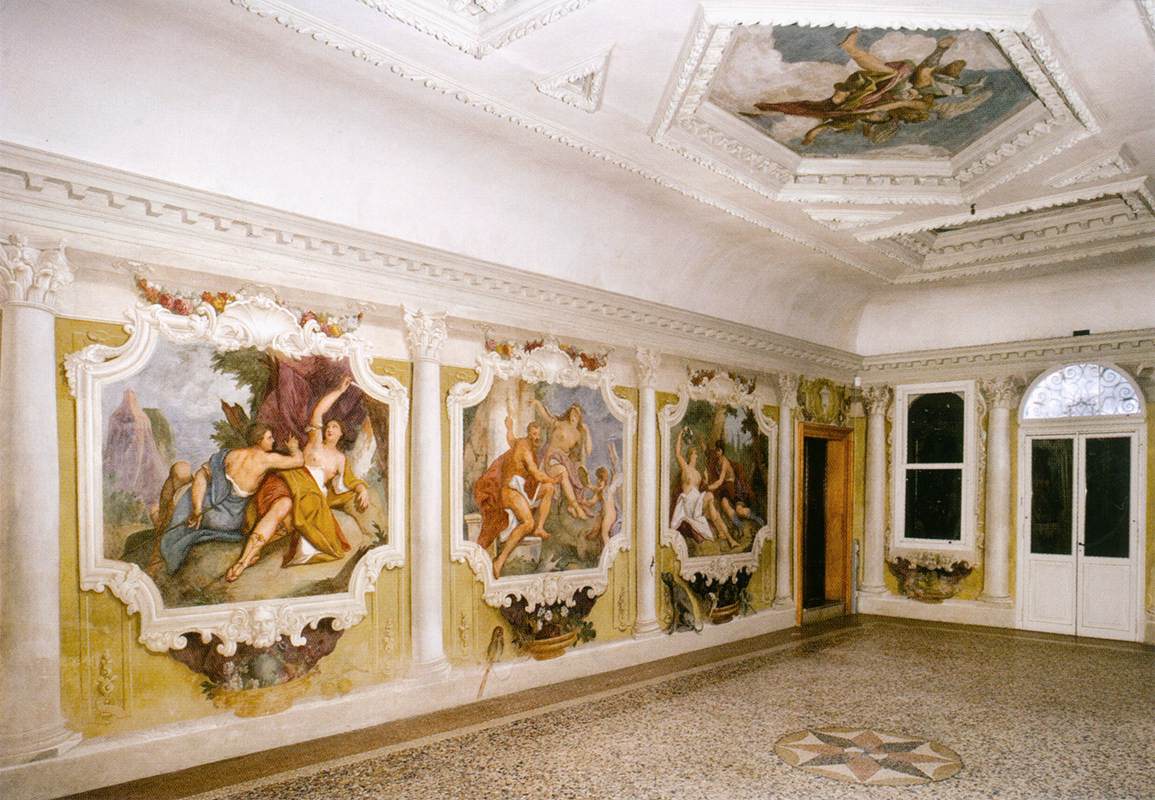
Italian painter. Son of a barber and brother of the painter Elisabetta Lazzarini (1662-1729), he was an accomplished painter of portraits, mythological and historical subjects. He was much patronized by the Venetian nobility, including the Labia, for whom he worked throughout the 1680s, and the Donà. He was trained first by the Genoese Francesco Rosa (d 1687), then by Girolamo Forabosco and, finally, in the academy of Pietro della Vecchia. He is documented as working in Venice from 1687 to 1715, after which he retired to Villabona. He painted with the solidity of the Emilian Baroque, to which he added rich Venetian colour, yet his work remained academic and occasionally almost Neo-classical in style. In 1691 he painted the Charity of St Lorenzo Giustiniani (Venice, S Pietro Castello), a large, dramatic composition, in which the figures are rhythmically arranged against a theatrical architectural setting. In 1694 he was commissioned by the Venetian state to decorate the Arco Morosini in the Sala dello Scrutinio in the Doge's Palace. His style developed very little: the Pool of Bethesda (1719; Venice, Fondazione Cini) and two vast canvases of biblical subjects, Solomon Riding David's Mule and the Coronation of Joash and the Death of Athaliah (both Agordo, Chiesa di Prompicai), are grandiose, multi-figured compositions that retain a clear, academic draughtsmanship. His mythological works include Aeneas and Mezentius (Macerata, Palazzo Buonaccorsi). Lazzarini headed an important school and is best remembered for being the teacher of Giambattista Tiepolo and Gaspare Diziani.
View all works →