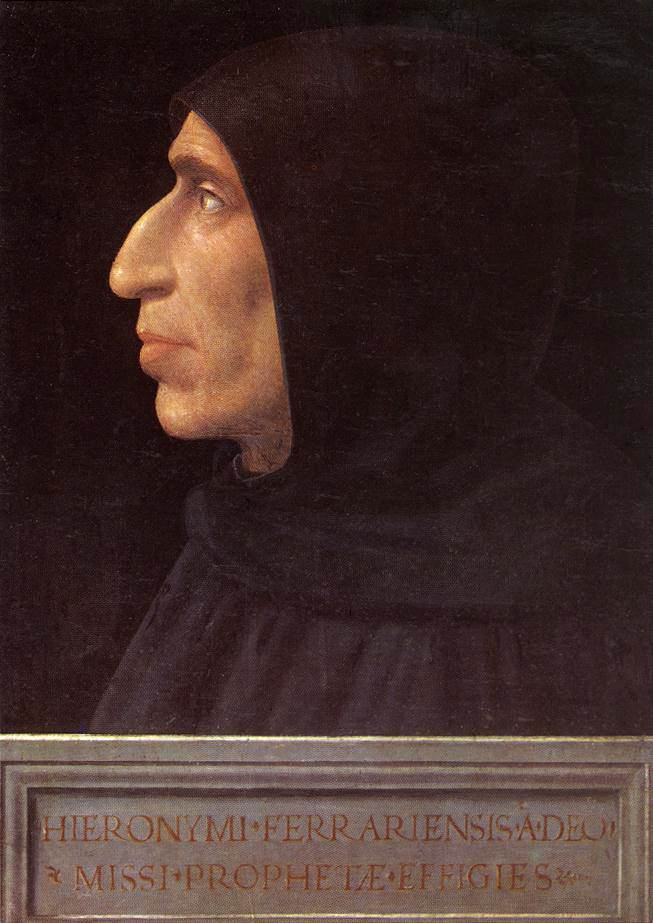
Fra Bartolomeo
1472 – 1517
Florentine painter. After training with Cosimo Rosselli, he was deeply influenced by the preaching of Savonarola and entered the Dominican Order in 1500, giving up painting until 1504. His original name was Baccio della Porta, but he changed his name to Fra Bartolomeo when he became a Dominican friar. From then until 1508 he developed parallel with Raphael - though Raphael's was the more imaginative genius - each contributing something to the new High Renaissance type of Madonna with Saints, in which the figure of the Madonna acts not merely as a centre but as a pivot about which the whole composition turns. The two artists also evolved a new treatment, first adumbrated by Leonardo, of the theme of the Madonna and Child with the Infant St John in a Landscape. Raphael, Michelangelo, and Leonardo had all left Florence by 1509 and in the second decade of the century Fra Bartolommeo was rivalled only by Andrea del Sarto as the leading painter in the city, which he left only briefly for visits to Venice in 1508 and Rome in 1514. His style acquired a solemn restraint and monumentality that made him one of the purest representatives of the High Renaissance {The Mystical Marriage of St Catherine, Louvre, Paris, 1511). Fra Bartolommeo was a brilliant draughtsman and the mystical element in his nature is expressed in his drawings, which escape the tendency to empty rhetoric occasionally shown in his later paintings. His drawings include not only figure studies, but also landscape and nature studies.
View all works →