Pere Nicolau
? – 1408
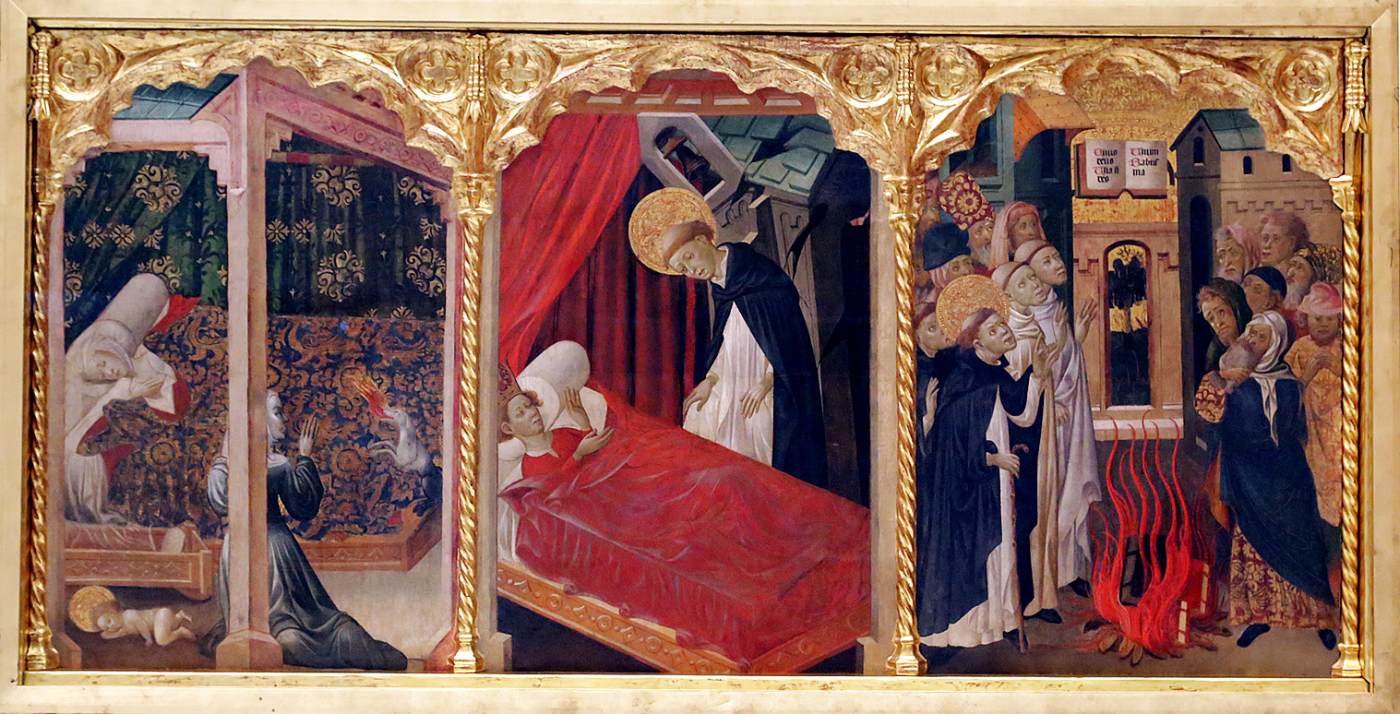
Spanish painter. Originally from Catalonia, he was described as a 'citizen of Valencia' in 1390, when he was paid for work in the cathedral there. This was the first of many commissions in Valencia Cathedral, some of which were undertaken jointly with Andrés Marzal de Sax. Nicolau also received royal commissions for Martin I of Aragon and worked for churches in the province of Teruel, which attests to his renown. He founded an important school and evidently trained Gonçal Peris and the Master of Burgo de Osma. The early Virgin of Humility attributed to him (Museo del Prado, Madrid) preserves some archaic elements, but the altarpiece of the Virgin (Museo de Bellas Artes, Bilbao) shows the delicate palette and refined yet exuberant draperies of the so-called International Gothic. In three slightly later altarpieces, also dedicated to the Virgin, expressive poses are adopted, like those seen in contemporary Parisian manuscript illumination. That from the church at Sarrión (Teruel) is Nicolau's only surviving documented work (1404). The central panel (destroyed) shows the Virgin and Child Enthroned with Angels, while the wings (Museo de Bellas Artes, Valencia) represent Scenes from the Life of the Virgin. The altarpieces at Albentosa, near Sarrión (destroyed during the Civil War, 1936-39), and Santa Cruz, Moya (Cuenca), of which only fragments survive, are closely related to this work. Nicolau's style shows an international range of influences, including features characteristic of south Netherlandish, Tuscan (Sienese and Florentine Schools), Catalan and probably Bohemian painting. The Annunciation and Resurrection in Bilbao, the panels in Santa Cruz, Moya, and the Albentosa altarpiece appear to be entirely by his hand. The figures in the complex scenes are ably positioned and grouped, and there is intense narrative vitality. An excellent draughtsman, Nicolau favoured definite facial types. The prophets in the Albentosa altarpiece are striking in the way in which they address the spectator.
View all works →