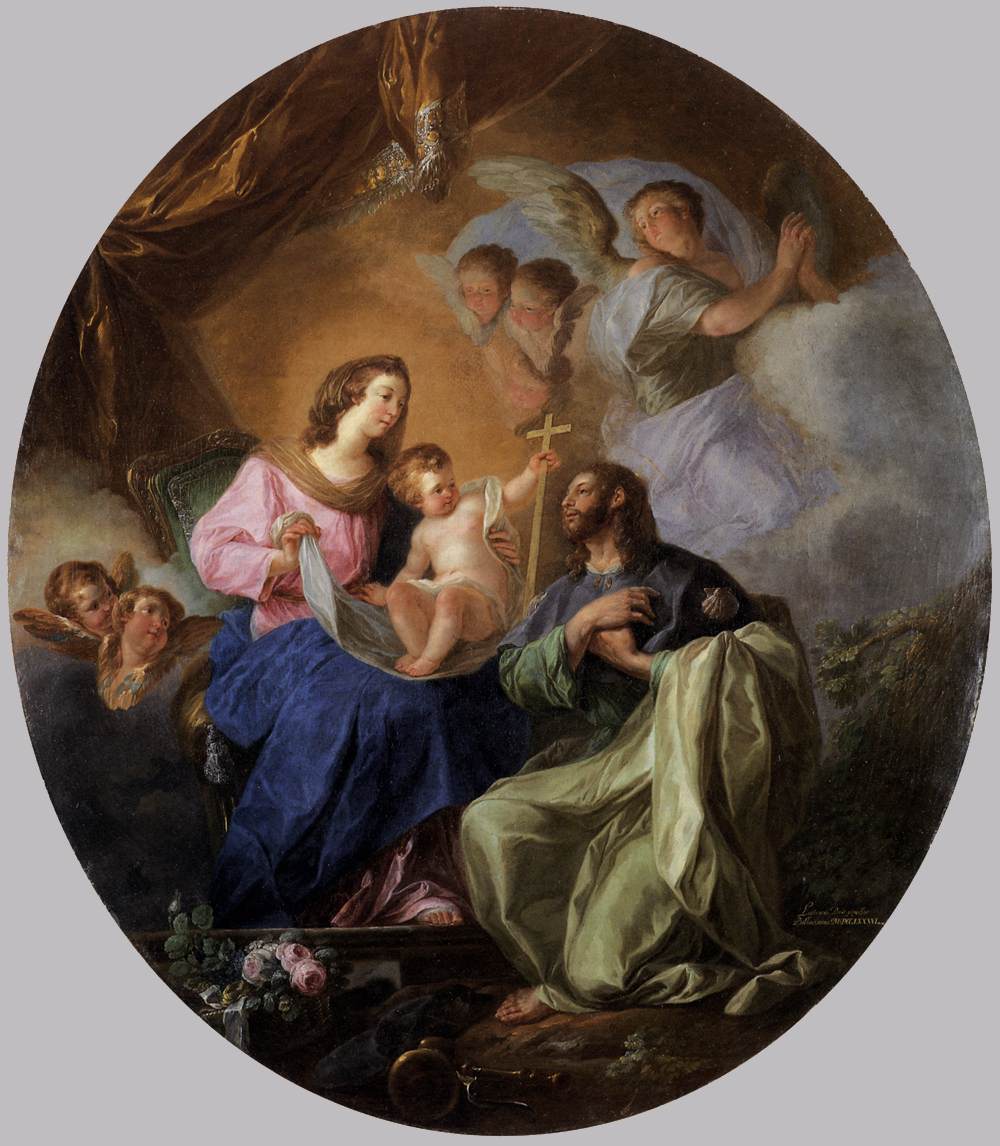
Luis Paret Y Alcazár
1746 – 1799
Spanish painter. His father was a Frenchman of Catalan descent, and his mother was Spanish. He trained in Madrid, first with the French jeweller Augustin Duflos (fl. 1722-67) and then with the Trinitarian friar Bartolomé de San Antonio (1708-82), uncle of the architect Ventura Rodríguez. Paret studied for four years at the Real Academia de Bellas Artes de S Fernando and with the patronage of the Infante Luis Antonio Bourbon, the brother of Charles III, went to Rome in 1763, where he completed his artistic training. On his return to Madrid in 1766, he won prizes at the Academia and probably travelled to France or studied contemporary French art under the guidance of Charles de La Traverse, who was a former pupil of François Boucher and who was in Madrid at that time. For unknown reasons he was exiled to Puerto Rico for three years in 1775. Returning from Puerto Rico in 1778 he settled in Bilbao where he lived for ten years. In 1780 he married María de las Nieves Michaela Fourdinier, and in the same year he painted Diógenes by which he was admitted to the Real Academia de Bellas Artes de San Fernando. In Bilbao he received many commissions for religious paintings, the most significant paintings of his oeuvre were executed in this period. Paret was influenced by the French Rococo, as well as by various Italian and Spanish schools of the 17th and 18th centuries. He became the most significant Spanish Rococo painter who produced paintings of all genres: landscapes, portraits, popular genres, court scenes, still-lifes, animal paintings and religious paintings. He applied many techniques such as oil, pastel, watercolour and Indian ink on panel, canvas, copper plate and paper.
View all works →