Pomarancio
1553 – 1626
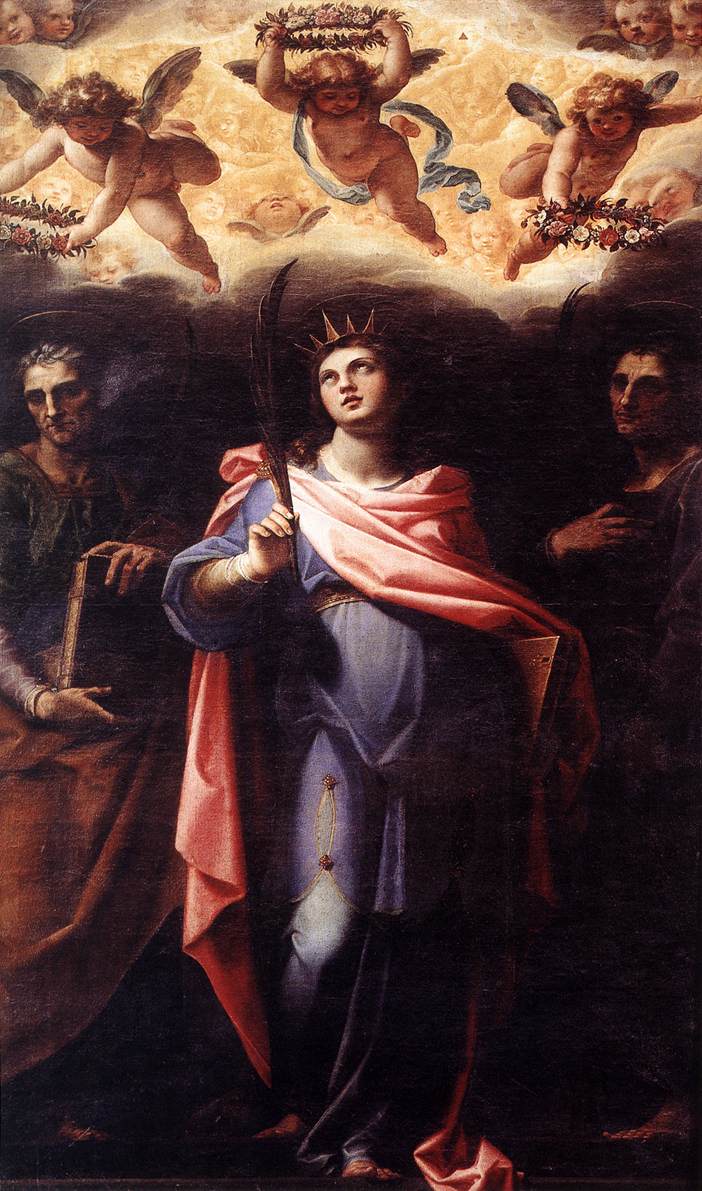
Italian painter, originally Cristoforo Roncalli. After his initial training in Florence, around 1575 Pomarancio moved to Siena, where he painted an altarpiece of The Madonna and Child with Sts Anthony and Agatha (1576, Museo dell'Opera del Duomo, Siena) and scenes from Ovid's Metamorphoses (Palazzo Bindi, Siena) for Ippolito Agostini. By 1582 Pomarancio was in Rome. His first major commission, two frescoes for the Oratorio del Santissimo Crocifisso at San Marcello, illustrates events from the history of the confraternity (1583-84). These frescoes, and fresco cycles depicting scenes from the Passion of Christ and the life of St Paul, respectively in the Mattei and Della Valle Chapels in Santa Maria in Aracoeli (1585-90), are still heavily indebted to late sixteenth-century Mannerism. Paintings with episodes from the life of St Filippo Neri in Santa Maria in Vallicella (1596-99), however, are characterised by a new realism and dramatic contrasts of light and shade. They represent a new phase in Pomarancio's artistic development as does his altarpiece from 1598-99 of St Domitilla with Sts Nereus and Achilleus (Chiesa dei Santi Nereo e Achilleo, Rome), which reveals an increasingly monumental and classical approach. For the Jubilee of 1600, he painted the Baptism of Constantine and the figure of St Simon in the transept of San Giovanni in Laterano (c. 1599) and designed the mosaics for the Clementine Chapel in St Peter's (c. 1600). In both cases he worked under the supervision of Cavaliere d'Arpino. Fresco cycles in the new sacristy (1605-10) and the cupola of the basilica of Santa Maria at Loreto (1609-15; destroyed) occupied the artist during his later years.
View all works →