Pordenone
1484 – 1539
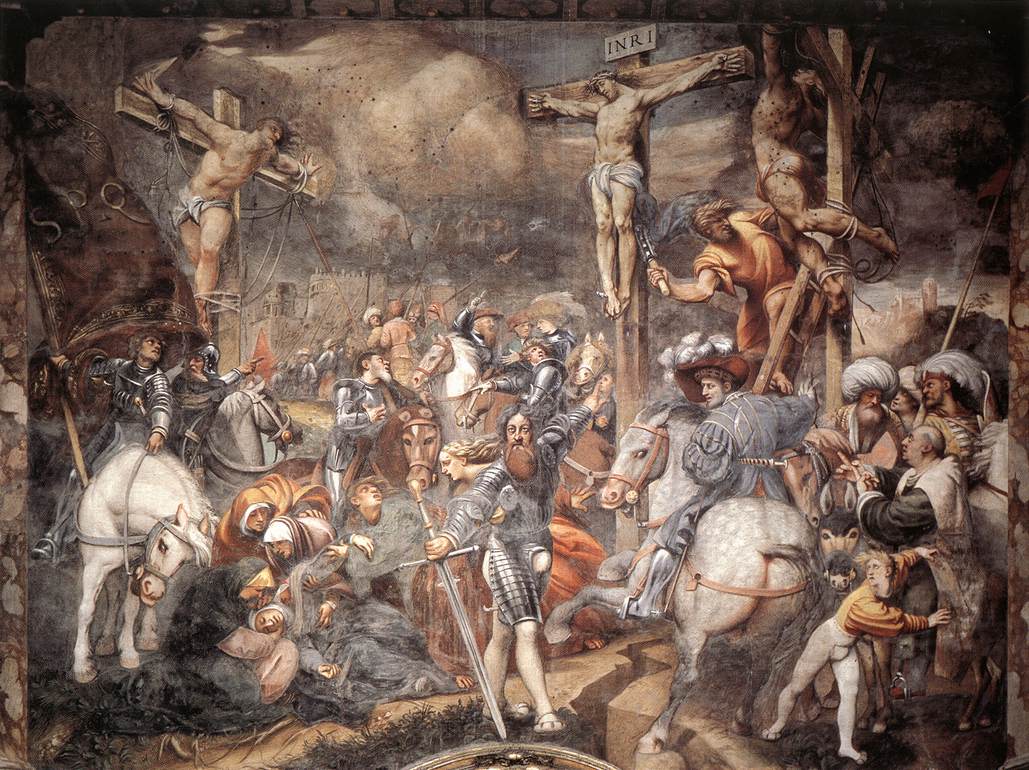
Pordenone (Giovanni Antonio de Sacchis), Italian painter, named after the town of his birth, Pordenone in the Friuli, and active in various parts of northern Italy. After working in a provincial style at the very start of his career (his master is unknown and Vasari says he was self taught), by the beginning of the second decade of the 16th century he had come close to the contemporary Venetian (specifically Giorgionesque) manner of painting. In the second half of the decade, however, he was in central Italy, and his style changed under the impact particularly of Michelangelo, acquiring great weight and solidity. Pordenone was influenced also by Mantegna 's illusionism and by German prints, and the style he forged from these diverse influences was highly distinctive and original. He always retained something of provincial uncouthness - at times vulgarity - but he was, in Vasari's words, 'very rich in invention . . . bold and resolute', and he excelled at dramatic spatial effects. These qualities are seen at their most forceful in his fresco of the Crucifixion (1520-21) in Cremona Cathedral; the densely packed, bizarrely expressive figures are seen as if on a stage through a painted proscenium arch and they lunge violently out into the spectator's space. From 1527 Pordenone was based in Venice and for a while he was a serious rival to Titian. His major works in Venice have been destroyed, however. Pordenone died in Ferrara, where he had gone to design tapestries for Ercole II d'Este.
View all works →