Pierre-Paul Prud'hon
1758 – 1823
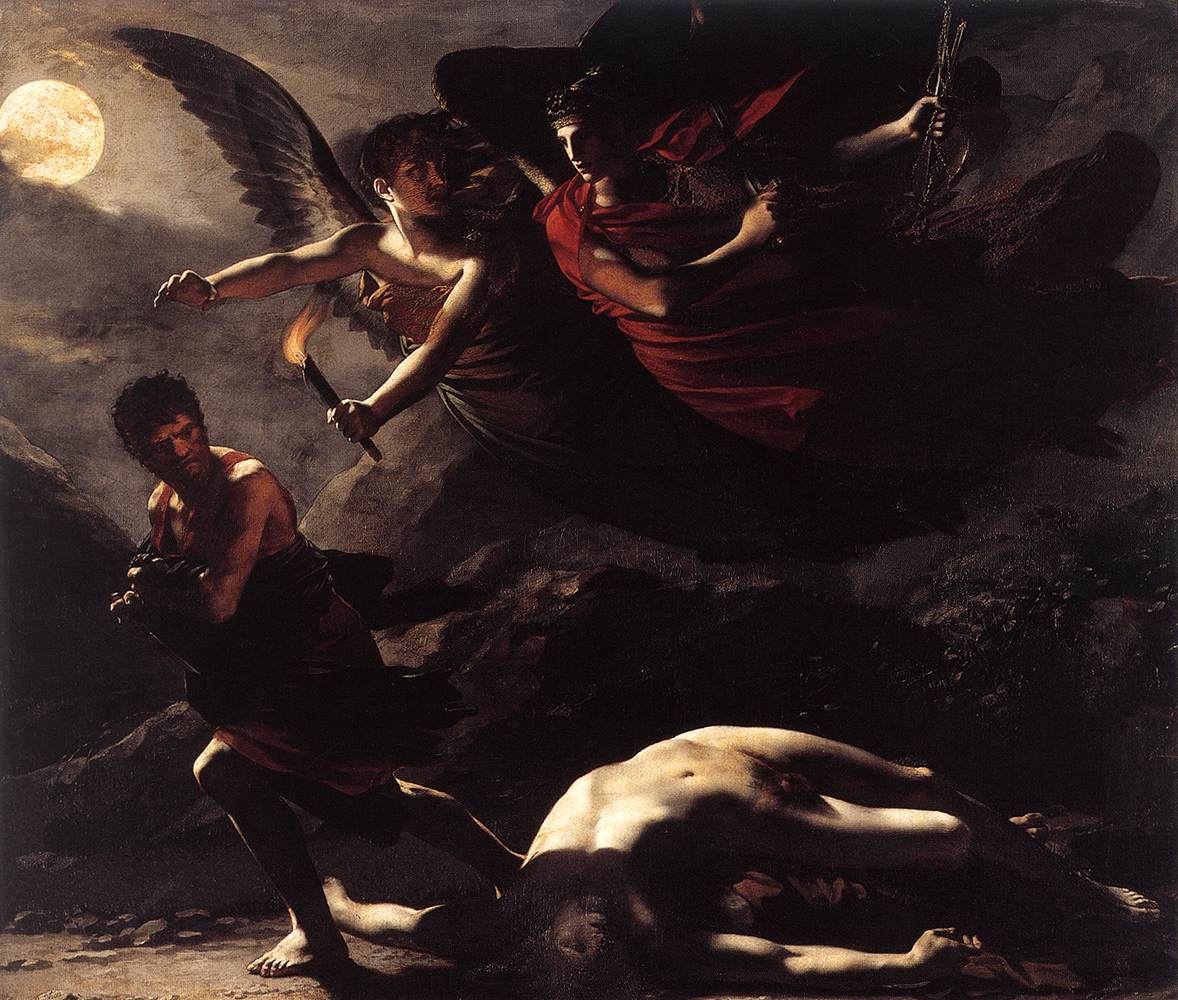
French portrait and historical painter. He was trained at the Dijon Academy and in 1784 went to Rome, where he was a friend of Canova and formed his style on the example of the sfumato and sensuous charm of Leonardo and Correggio. In 1787 he returned to Paris and after working in obscurity for some time he became a favourite of both empresses of the French, Josephine and Marie-Louise, designing the decorations for the bridal suite of the latter. His friendship with the statesman Talleyrand enabled him to remain in favour even after the fall of Napoleon in 1815, but he painted little in his final years. He had a neurotic personality and the shock of the suicide of his mistress - his pupil Constance Mayer - in 1821 led to his own death. Prud'hon belongs both to the 18th and to the 19th centuries. In his elegance, his grace, and his exquisite fancy he is akin to the epoch of Louis XVI - David referred to him slightingly as the Boucher of his time. But his deep personal feeling aligns him with the Romantics . Gros said of him: He will bestride the two centuries with his seven league boots. Among his best-known pictures are Justice and Divine Vengeance pursuing Crime (Louvre, 1808), for which he received the Legion of Honour, and Venus and Adonis (Wallace Collection, London, commissioned 1810, but still in Prud'hon's studio at his death). Prud'hon was an outstanding draughtsman, but many of his paintings are in poor condition because of his use of bitumen.
View all works →