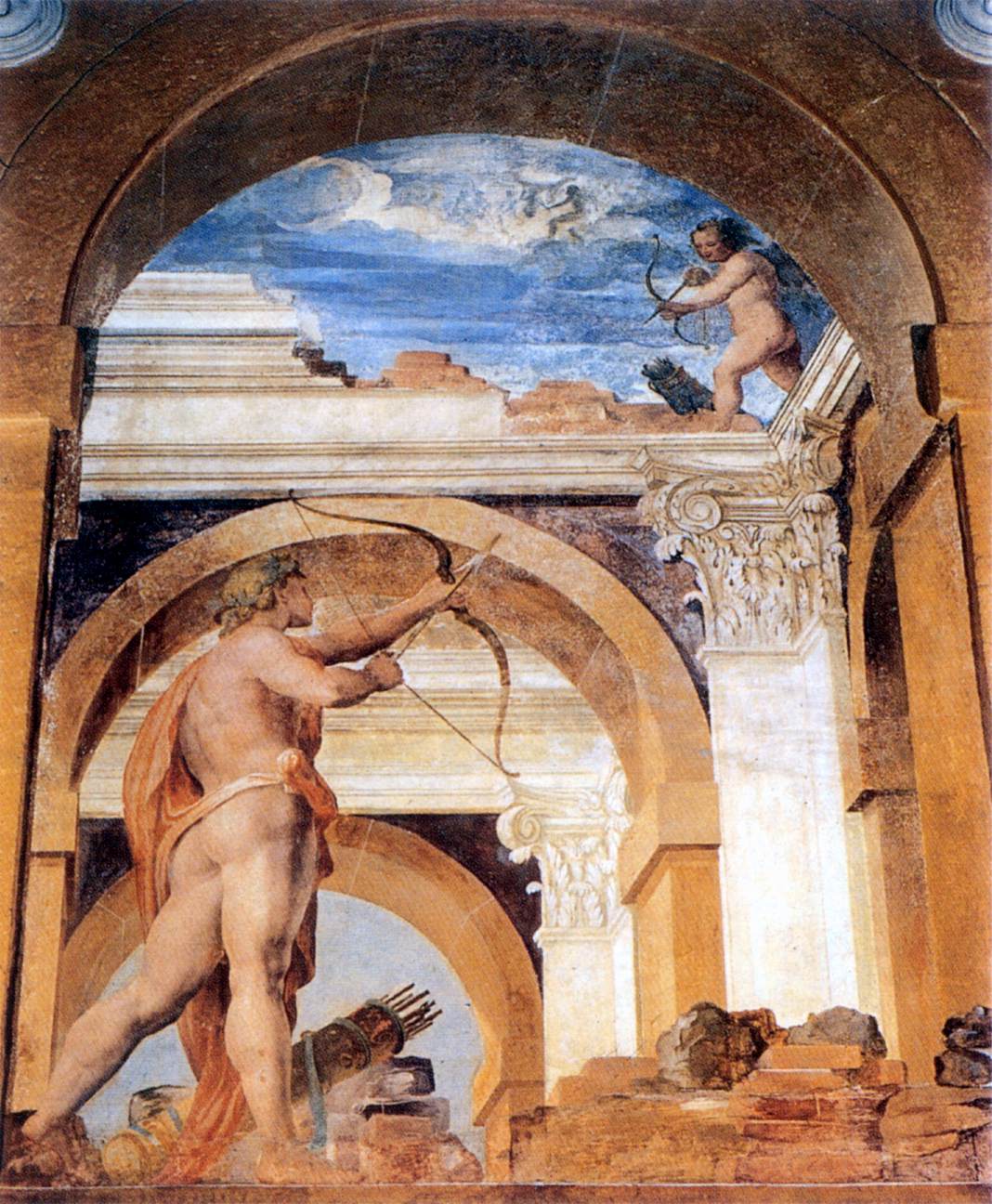
Il Bergamasco
1509 – 1569
Giovanni Battista Castello, Italian painter, architect and sculptor. He is usually called Il Bergamasco after his father's native region to distinguish him from the other painter (of miniatures) with the identical name from the school of Genoa. When young, he apprenticed with Aurelio Buso of Crema (active 1510-c. 1570), a pupil of Polidoro da Caravaggio. He arrived in Genoa in the 1540s, and was sponsored here by Tobia Pallavicino and sent to Rome for some years. In Rome, he was attracted above all by the art of Raphael. After his return Bergamasco painted frescoes for Pallavicino not only in his villa but also in his palace in the city, the Palazzo Carregi Cataldi, which was built by Bergamasco from 1558 to 1561. He painted of the Martyrdom of St. Sebastian in the monastery of San Sebastiano. Along with Luca Cambiaso, he was commissioned by the Duke Grimaldi to decorate the ceiling of the choir of the Nunziata di Portoria in Genoa, with a fresco of Christ as judge of the world. He worked on various projects with his friend Cambiaso, including in a chapel for the Duomo di San Lorenzo. He decorated rooms of the Villa Lanzi, Gorlago, near Bergamo, with scenes from the Iliad. In 1567 he was invited to Madrid to become painter and architect to Philip II. He also executed some works in the Escorial, and died holding the office of architect of the royal palaces, including the Pardo Palace. As architect, he is supposed to have remodeled the church of San Matteo in Genoa and to have designed the imperial palace at Campetto.
View all works →