Marietta Robusti
1554 – 1590
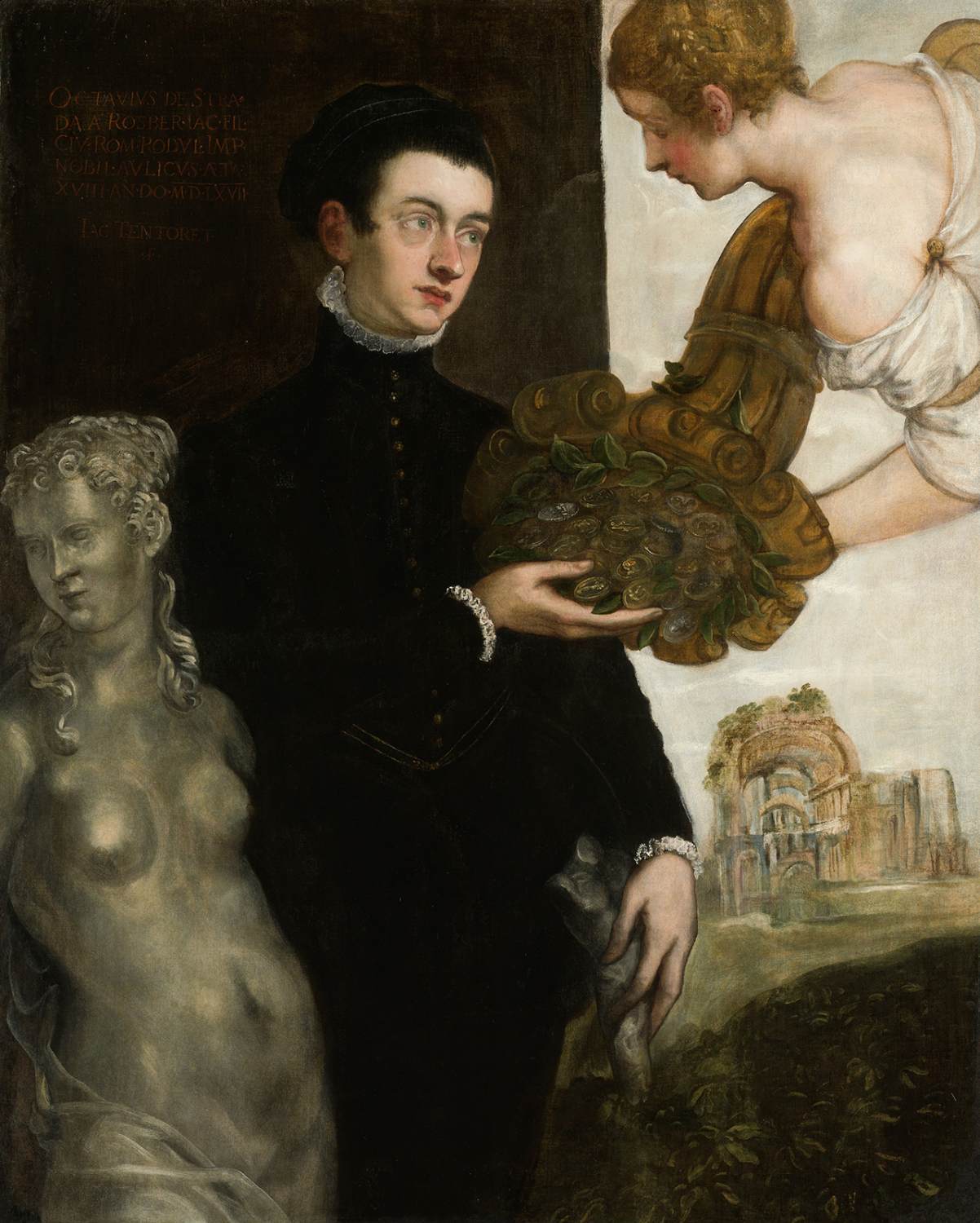
Marietta Robusti (Tintoretto), Italian painter, daughter of Tintoretto. She was taught by her father and assisted him in his workshop. It is said that while young, he had her dress like a boy and follow him everywhere. As his favourite daughter, Jacopo also had her married to a local jeweller to keep her near him. Marietta does not appear to have received commissions for major religious paintings, and, like other women artists in this period, she worked primarily as a portrait painter. Apart from a Self-portrait (Florence, Uffizi), no work can be assigned to her with certainty. The three portraits attributed to her in Madrid (Prado) include a possible self-portrait. The only surviving painting that may be signed by her is a Portrait of Two Men (Dresden, Gemäldegalerie), which bears the initials MR. Ridolfi wrote that her portrait of the antiquarian and collector Jacopo Strada attracted the attention of Emperor Maximilian II, who enquired about her employment as court painter. However, this may be a mistaken reference to the portrait of Strada's son Ottavio Strada (Amsterdam, Stedelijk Museum). Philip II of Spain apparently showed a similar interest in Marietta's work. A few small religious paintings are attributed to her, including two pictures of the Virgin and Child (both Cleveland, OH, Museum of Art), and her work as an assistant is thought to be evident in certain of her father's paintings (e.g. St Agnes Reviving Licinio, c. 1578-79; Venice, Madonna dell'Orto). Two drawings after models (private collection) are also assigned to her and were probably executed while she was in her father's workshop.
View all works →