FINDART

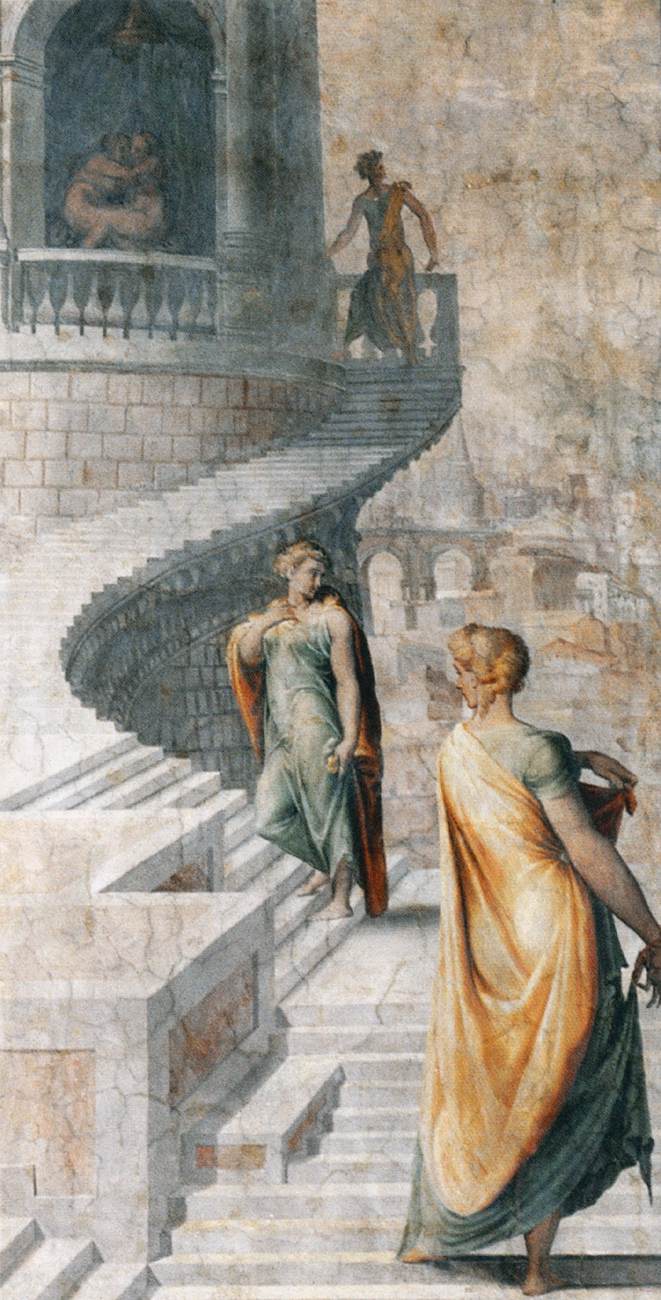
Bathsheba Bathing (detail)

1552 · Sala dell'Udienza Invernale, Palazzo Ricci-Sacchetti, Rome

religious

The decorative system in this room is itself a significant part of the message of this work, for it shows us an accurate image of Cardinal Giovanni Ricci as a well-to-do, eclectic collector as interested in fine arts and objets d'art as in expensive curiosities. Salviati in his frescoes shows his reverence for these interests and the taste of his patron. That the decoration is intended to show the wealth and fortune of its patron is made clear to the observer in a different way: the various hangings beneath the main paintings all have as their protagonist a small hedgehog (riccio in Italian), the patron's impresa, which cannot be seen at first glance but is clear on closer inspection.
Loading map…
Bathsheba Bathing (detail)

About the Artist

Cecchino del Salviati

15101563

Florentine Mannerist painter, a pupil of Andrea del Sarto. Originally Francesco de' Rossi, he adopted his name from his patron Cardinal Giovanni Salviati, with whom he went to Rome c. 1530 and for whom he painted the work that established his reputation there - the frescoes in the Oratorio di San Giovanni Decollato, Rome (1538). In 1539 he travelled to Venice, and from the 1540s led a restless life, working mainly in Florence and Rome, but also visiting Fontainebleau in 1556-57. He was one of the leading fresco decorators of his day, specializing in learned and elaborate multi-figure compositions, typically Mannerist in their artificiality and abstruseness, and similar in style to those of his friend Vasari (although Salviati was an artist of higher caliber). One of his finest works are the frescoes on the story of the ancient tyrant Furius Camillus (1543-45) in the Sala dell' Udienza of the Palazzo Vecchio, Florence, intended as an allegory of Cosimo de' Medici's reign. In 1552, Salviati was entrusted by Cardinal Giovanni Ricci (1497-1574) to paint the hall in his newly acquired palace in the Via Giulia in Rome. He decorated the hall, now known as the Sala dei Mappamundi and previously as the Sala dell'Udienza Invernale, with the story of David as told in the first and second books of Samuel. Salviati also made designs for tapestries and was noted for his portraits, which were Florentine in their direct characterization but north Italian in their richness in colour.

View all works →