Sebastiano Del Piombo
1485 – 1547
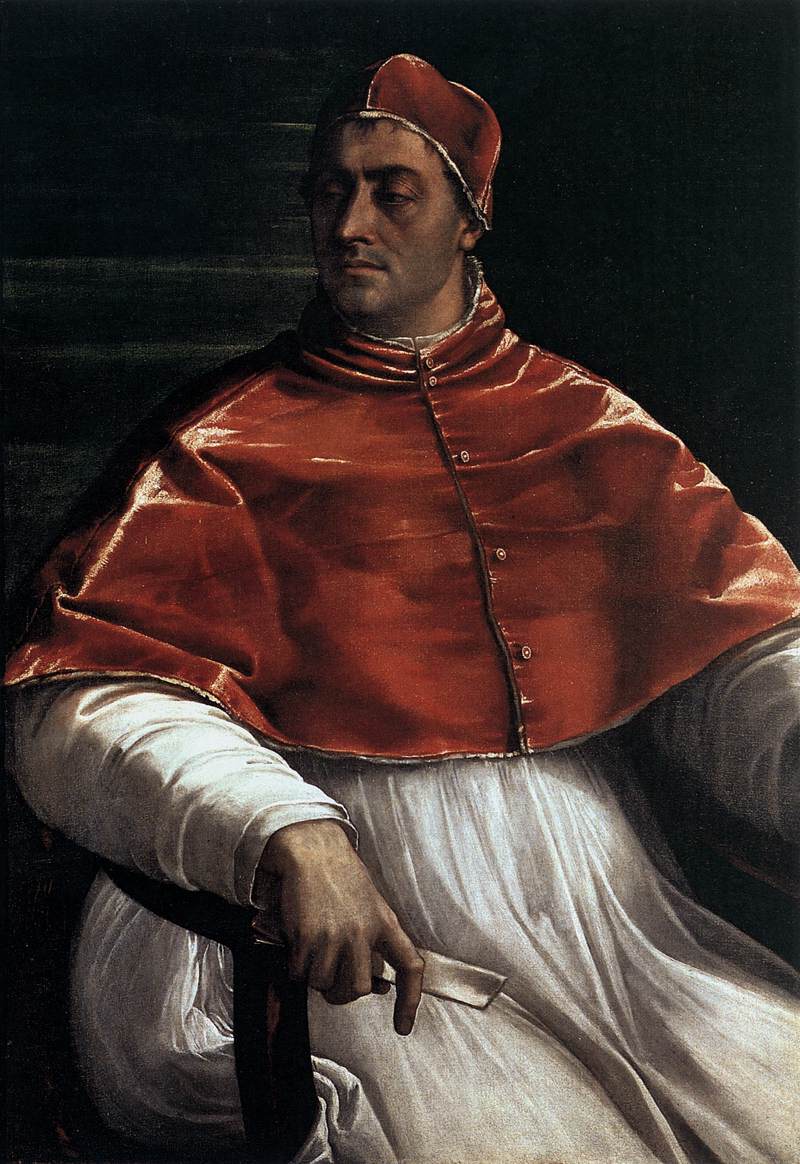
Sebastiano del Piombo (originally Sebastiano Luciani), Venetian painter, active mainly in Rome. According to Vasari, he trained with Giovanni Bellini, but his early work was most strongly influenced by Giorgione, whose Three Philosophers (Kunsthistorisches Museum, Vienna) Sebastiano is said to have completed after the master's death. Their styles, indeed, can be so close as to cause paintings to be disputed between them, most notably the unfinished Judgment of Solomon (National Trust, Kingston Lacy). This large and impressive work was attributed to Giorgione by Ridolfi , but scholarly opinion now increasingly tends towards giving it to Sebastiano. The half-length Salome (or Judith?) (National Gallery, London, 1510) shows the magnificent painterly skills of an undoubted work of Sebastiano at this date; it has a sensuous beauty reminiscent of Giorgione, but also a statuesque grandeur that is Sebastiano's own. In 1511 Sebastiano moved to Rome on the invitation of the banker Agostino Chigi, and he remained there for the rest of his life apart from a visit to Venice in 1528-9 after the Sack of Rome. For Chigi he painted mythological frescos at the Villa Farnesina, where Raphael also worked. It was with Michelangelo rather than Raphael, however, that Sebastiano formed a friendship and a professional relationship. Michelangelo not only recommended him to people of influence, but also made drawings for him to work from, as with The Raising of Lazarus (National Gallery, London, 1517-19). This was painted in competition with Raphael's Transfiguration (Vatican), both being intended for Narbonne Cathedral, and Vasari suggests that Michelangelo helped Sebastiano in order to discredit the Raphael faction, who had denigrated his powers as a colourist. Under Michelangelo's guidance Sebastiano's work became grander in form whilst losing much of its beauty of handling, the lack of sensuous appeal being accentuated when he began experimenting with painting on slate, as in The Flagellation (San Pietro in Montorio, Rome). Some of the finest works of Sebastiano's Roman years are his portraits, and after Raphael's death (1520) he had no rival in the city in this field, his work attaining a distinctive sombre grandeur. Clement VII (Giulio de' Medici), the subject of one of Sebastiano's finest portraits (Museo di Capodimonte, Naples, 1526), appointed him keeper of the papal seals in 1531 and after this he was less active as a painter. The seals were made of lead, 'piombo' in Italian, hence Sebastiano's nickname.
View all works →