Michel Sittow
1468 – 1525
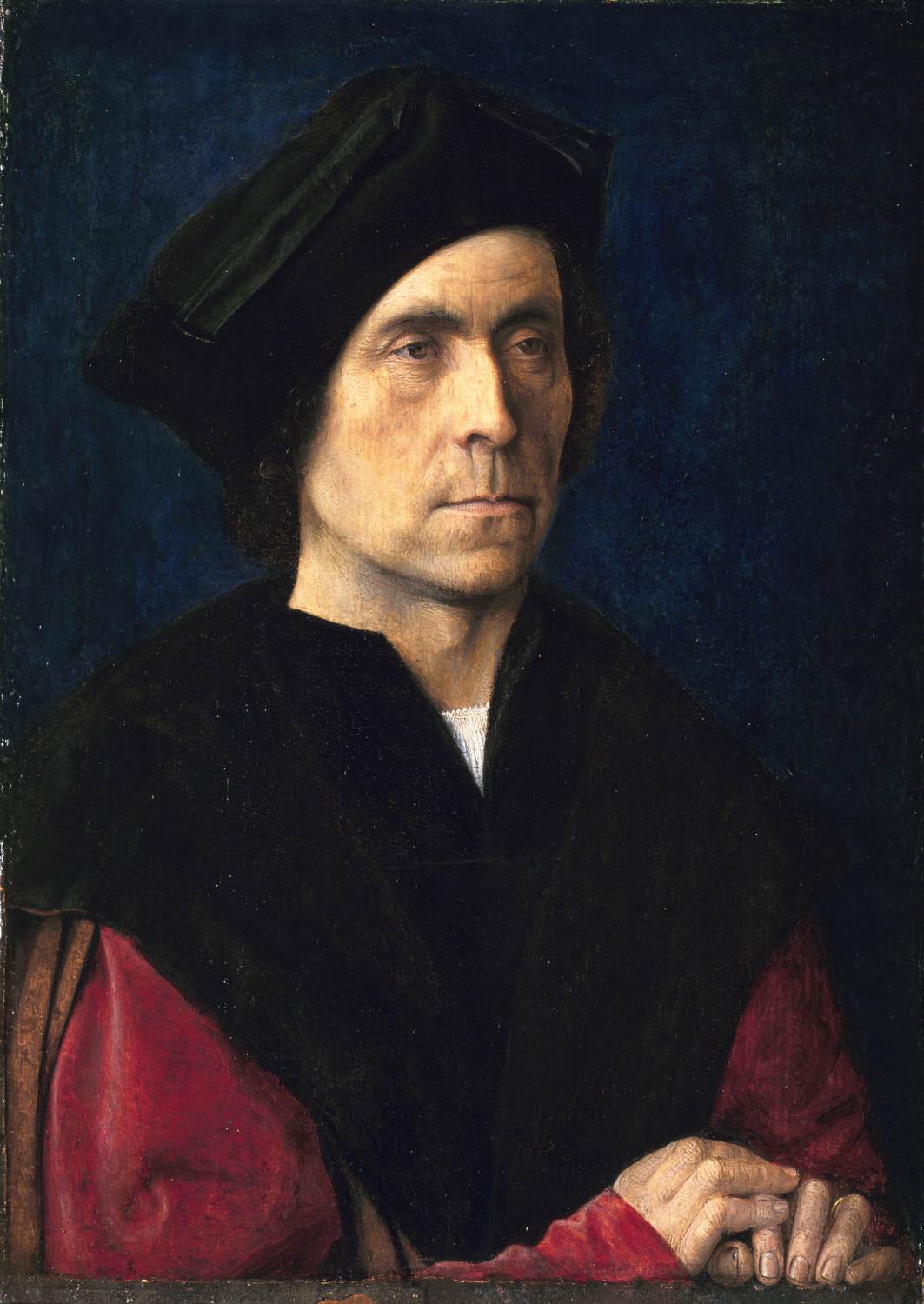
Flemish painter of Estonian birth. His career is well documented, though only a few securely attributed paintings survive. His work as a painter of portraits and small devotional works for princely patrons represents an international and courtly extension of the early Netherlandish school. Much is known about Michael Sittow's peripatetic career painting for princely patrons, but few securely attributed paintings survive. A painter's son, he had gone to Bruges for his training around 1484 and remained until 1491, becoming a master of the elegant, chiseled style which is characteristic of the Ghent-Bruges school. He was in Spain by 30 March 1492, and seems to have been employed principally as a portraitist, court painter to Queen Isabella, although only a few works from his Spanish period survive. Although he remained in Isabella's service until her death in 1504, he had left Spain by late 1502. He then spent some time in the Netherlands at the courts of Philip the Fair and Margaret of Austria, and worked at the court of Christian II of Denmark, and in his Estonian hometown of Tallinn. He may also have traveled to England. By 1518 he was back in Tallinn, whose artists' guild he had joined in 1507. Sittow specialized in small devotional works and portraits, which often projected a melancholy mood. For Margaret of Austria, Sittow produced a type of precisely observed portrait in which his sitter wore contemporary dress, a halo, and a reserved demeanour indicating sainthood. Manuscript illumination and Netherlandish painting of the 1400s influenced Sittow's style. He used translucent layers of paint to achieve highly refined and subdued colour harmonies, combined with sensitivity to texture and light effects.
View all works →