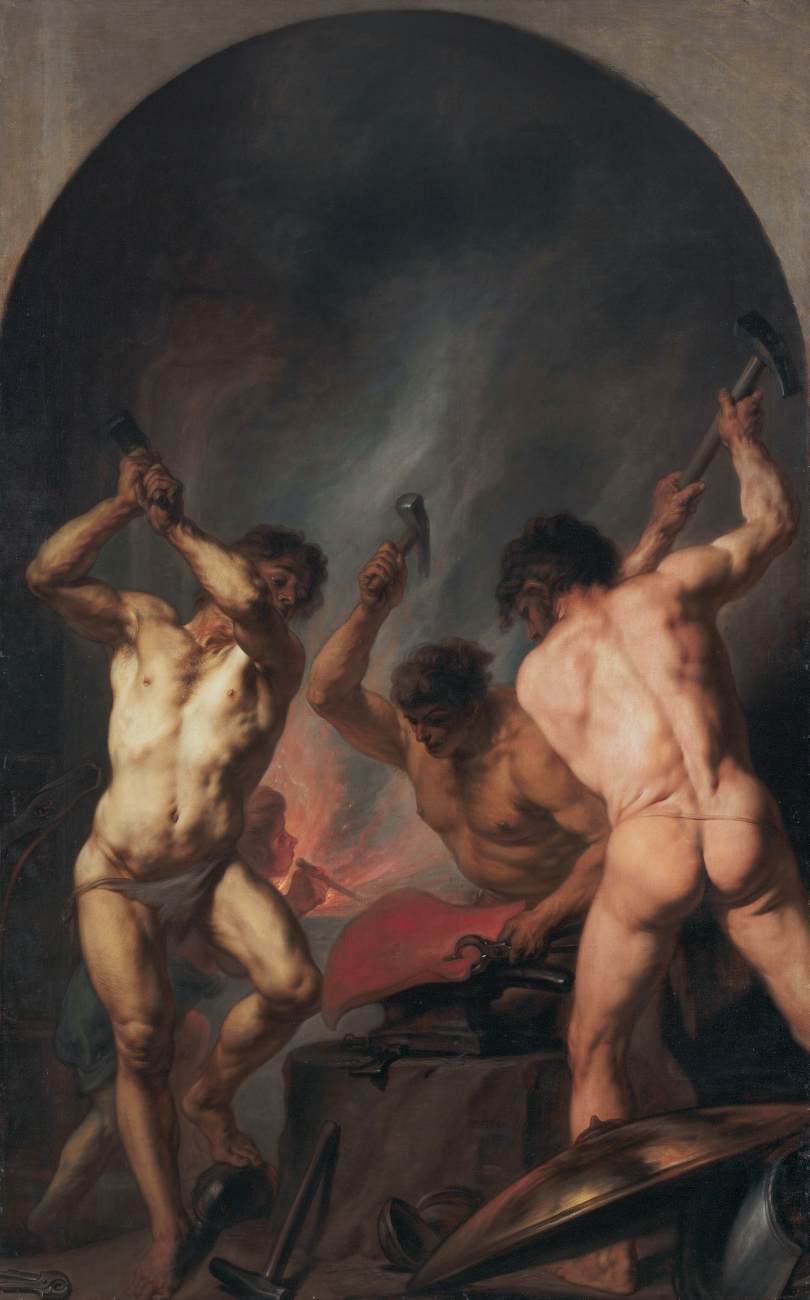
Theodor van Thulden
1606 – 1669
Flemish painter, engraver and designer of tapestries, a pupil and collaborator of Rubens. He trained under an Antwerp portrait painter. By 1626 he became a master in Antwerp's painters' guild and later served as its dean. A visit to France from 1631 to 1633 introduced the Mannerism that deeply affected Van Thulden's early works. At Fontainebleau he copied Primaticcio's and Nicolò dell'Abate's decorations. Back in Antwerp, his manner increasingly reflected Rubens's Baroque influence. In 1635 he executed Rubens's designs for city decorations celebrating the triumphal entry of Cardinal-Infante Ferdinand of Spain. By 1644, despite returning to his obscure birthplace, the famous Van Thulden continued receiving major commissions. His style grew increasingly classical: his compositions became more calm, his subjects less violent and more emotional, his brushstroke less exuberant, and his colors muted. Real piety imbued his religious works, including engravings, drawings, stained-glass windows, and altarpieces. Other subjects encompassed mythology, history, literature, and portraiture, often emulating Anthony van Dyck's graceful, elegant manner. Between 1648 and 1651, he created decorations for the Dutch palace in The Hague, along with Jacob Jordaens and others. Although like most contemporary painters of historical and religious themes he was strongly influenced by Rubens, he did succeed in working out a personal idiom. His appealingly sweet style won him numerous commissions both inside and outside of Flanders, and he worked in The Hague and Paris, as well as Antwerp, where he was mainly based.
View all works →