Pellegrino Tibaldi
1527 – 1596
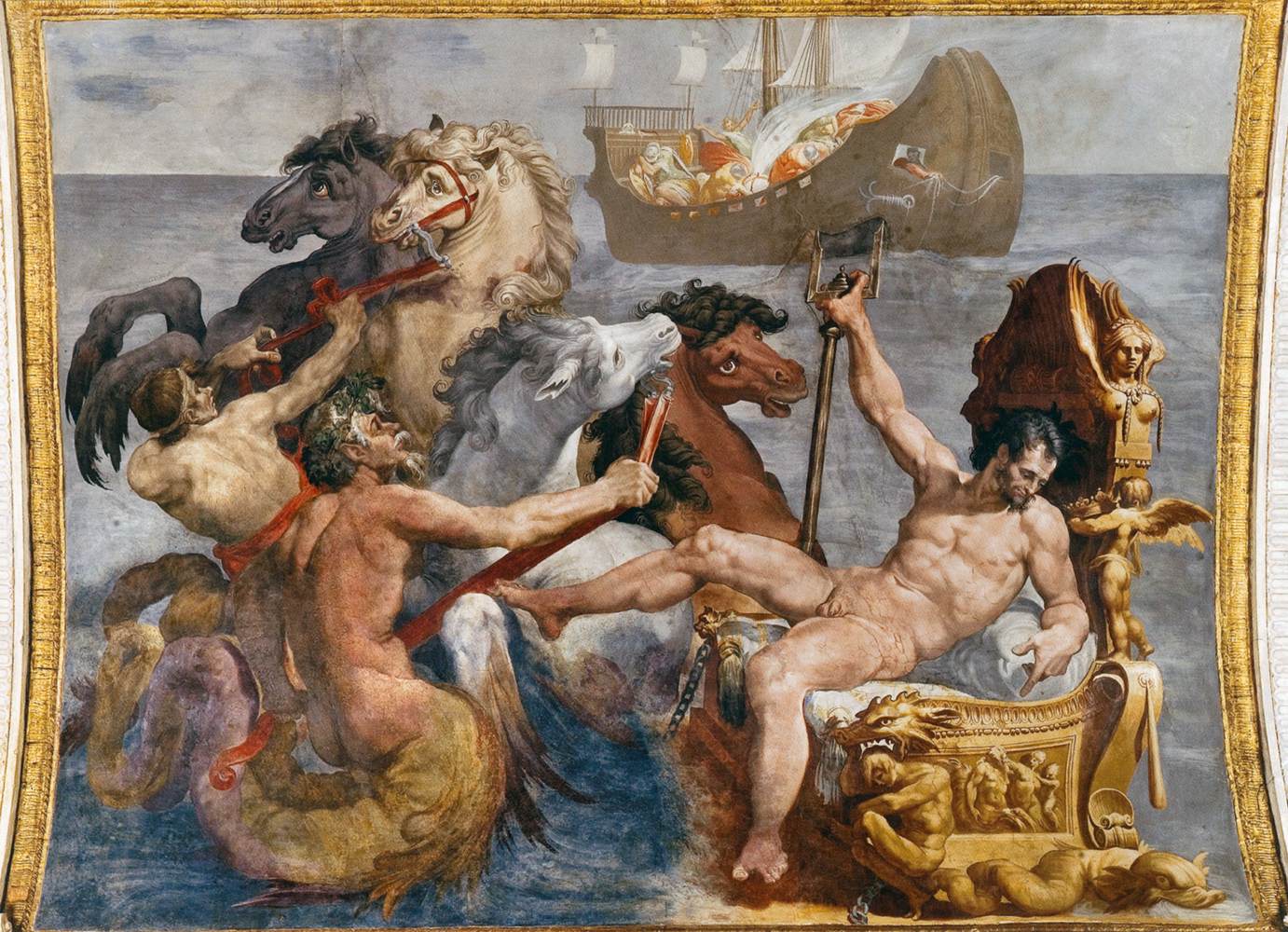
Italian Mannerist painter, part of a family of artists. His early paintings show the influence of Bagnacavallo and of other Bolognese followers of Raphael, but his actual teacher is unknown. Vasari 's claim that his own works in S Michele in Bosco, Bologna, formed Tibaldi's artistic education is hardly borne out by the latter's first efforts. The Mystic Marriage of St Catherine (c. 1545; Bologna, Pinacoteca Nazionale) is, in its classical, hierarchical simplicity, clearly inspired by Raphael's manner as interpreted by his Bolognese imitators; although it also bears delicate marks of Parmigianino's grace, the power of its expressive dignity and the architectural background hint at Tibaldi's future development. Tibaldi's Adoration of the Shepherds (c. 1546; Cento, Pinacoteca) shows an attempt at more elaborate composition, but its overtly Mannerist elements - perhaps derived from Vasari, as well as from Parmigianino - were not sufficiently digested to be fully integrated into the design. Summoned to Bologna around 1555 by Cardinal Giovanni Poggi, Tibaldi painted witty frescoes in the Palazzo Poggi, now the university, depicting the story of Ulysses. Extravagant posturings and combinations of forms created striking patterns that made space appear expansive and elastic. Pupils from the Carracci Academy studied his frescoes, and his ceilings directly inspired Annibale Carracci's decorations in the Palazzo Farnese gallery in Rome. After twenty years as architect for Cardinal Carlo Borromeo, Tibaldi traveled to Spain at the invitation of King Philip II in 1586. There he supervised the decoration of the Escorial and spread Mannerism to Spain through his vast output. Rich and ennobled, Tibaldi returned to Milan in 1596 and died shortly thereafter.
View all works →