Ottavio Vannini
1585 – 1644
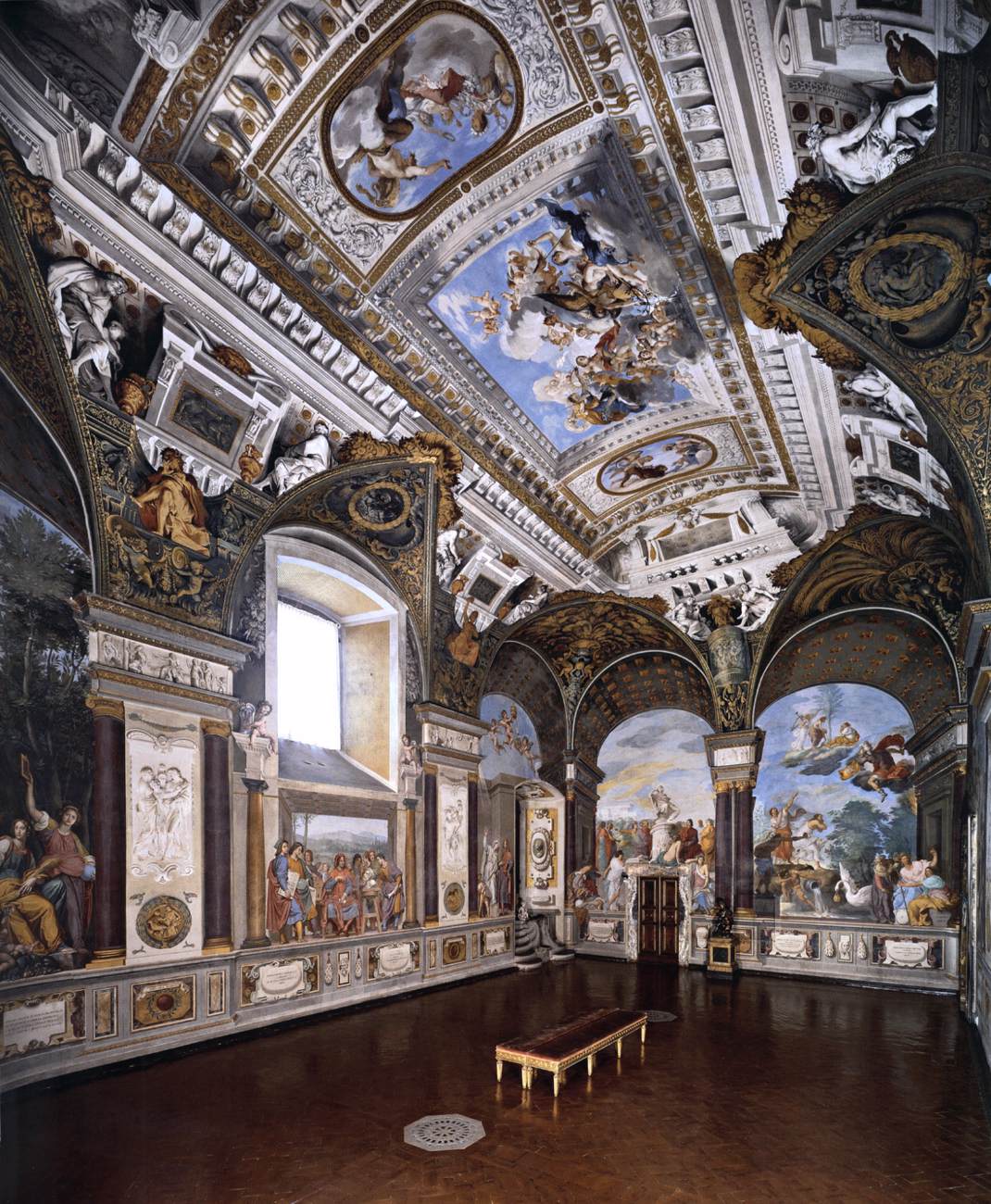
Italian painter. He studied with Domenico Passignano in Florence and with Anastasio Fontebuoni (1580-1626) in Rome. In 1605, together with the Sienese painter Pietro Sorri (1556-1622), he executed one of his first commissions by completing the decoration of the Brunaccini Chapel in the church of the SS Annunziata in Florence. Probably he then moved to Rome as Passignano's assistant, which makes his work of this period difficult to isolate and identify confidently. Nonetheless, under the influence of his studies of Raphael and Michelangelo, he developed a personal style based on 16th-century classicism. He returned to Florence, where in 1618 he matriculated at the Accademia del Disegno and was fully employed on numerous commissions and in making copies. From c. 1619 he was involved in several important decorative schemes in Florence: in the Palazzo dell'Antella (Three Virtues (1619-20; part destroyed) in the cycle of frescoes on the façade); in 1622-23 at the Villa di Poggio Imperiale (four panels in the small vault of the Sala di Cosimo II and lunettes in other rooms); in the Casino Mediceo (decorations of the vault of the Sala di Francesco I). His most prestigious commission (1638-42) was executed at the Palazzo Pitti in Florence, where he completed the Salone degli Argenti (left unfinished by Giovanni di San Giovanni) with Lorenzo the Magnificent among the Florentine Artists (in situ). For his most important patron, Andrea del Rosso (1640-1715), he frescoed the private chapel (destroyed) at his palace in the Via Chiara, executed at least 14 paintings (e.g. the Gathering of the Manna and Moses Drawing Water from the Rock, both Florence, private collection) for Rosso's collection (works that are judged to be among his finest), and also produced other works intended for public places. Among his most notable paintings are Judith (c. 1625-30; Pisa Cathedral), the Virgin and Saints (1630s; Poppi, in Arezzo, S Fedele) and Rebecca at the Well (c. 1626-27; Vienna, Kunsthistorisches Museum).
View all works →