Pietro Paolo Bonzi
1576 – 1636
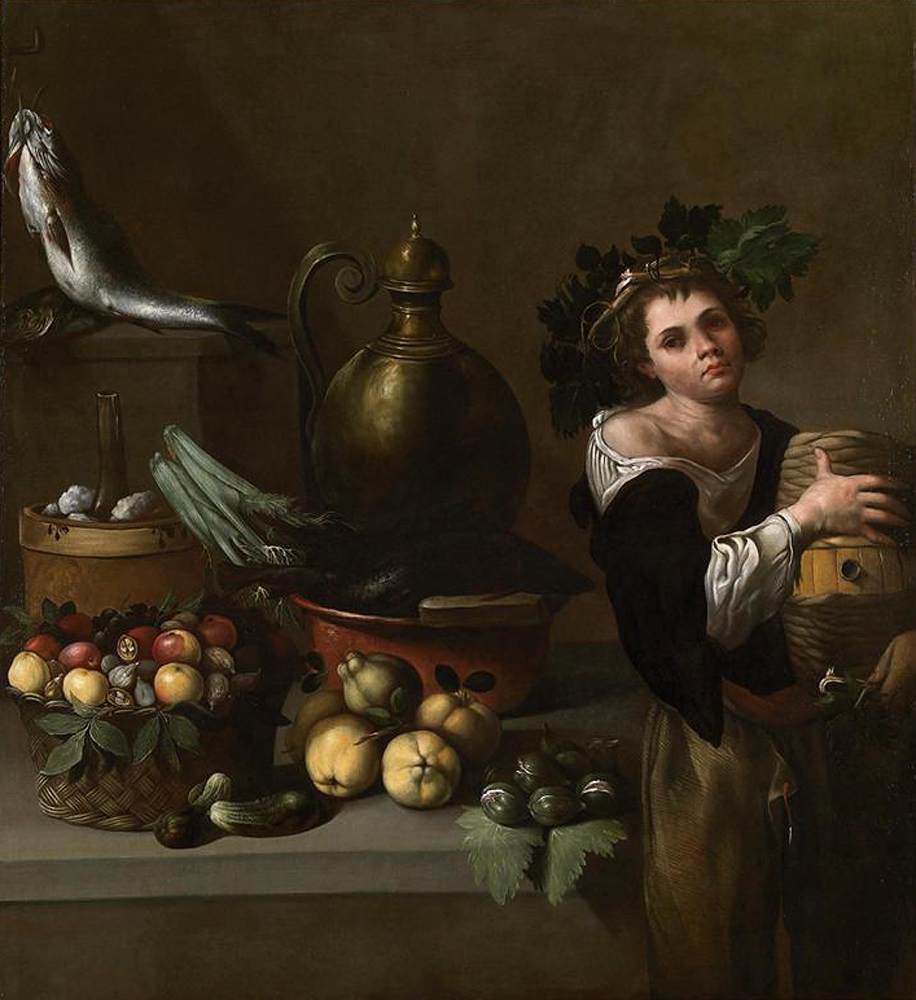
Italian painter, called Il Gobbo dei Frutti or Il Gobbo dei Carracci (il Gobbo meaning "the hunchback"). According to Giovanni Baglione, Bonzi soon moved from Cortona to Rome and settled in the household of the Crescenzi, where with their support he became a painter of still-lifes. He was so talented at this new trade that he earned the nickname "Gobbo dei frutti". Two works bear his signature: Fruit, Vegetables and a Butterfly, signed "P. Paolo di Cortona", and a lost Still-life. Grouped on tiered ledges, his crisply painted compositions anticipate those of the Neapolitan painters of the following decades, such as Luca Forte and Giovan Battista Ruoppolo. Still-life painting may have marked his beginnings, but his activity was not restricted to this genre. Bonzi's landscapes and figure paintings aroused admiration for their artistic versatility. His connection with the Carracci circle led to yet another nickname, "il Gobbo dei Carracci". The Giustiniani inventories of 1638 cite paintings by Bonzi and many of his still-lifes are documented in the 1670 inventory of Principe Lorenzo Onofrio Colonna's collection. He also worked in fresco and in 1622-23 collaborated with his younger compatriot Pietro Berrettini, better known as Pietro da Cortona, on the ceiling of a gallery in the Palazzo Mattei di Giove. Other commissions cited by Baglione include his work in the Palazzo Pallavicini Rospigliosi. A late altarpiece documented in 1633 for Santa Maria ad Martyres, The Incredulity of St Thomas, represents a further fact of his artistic range.
View all works →