Domenico Maria Viani
1668 – 1711
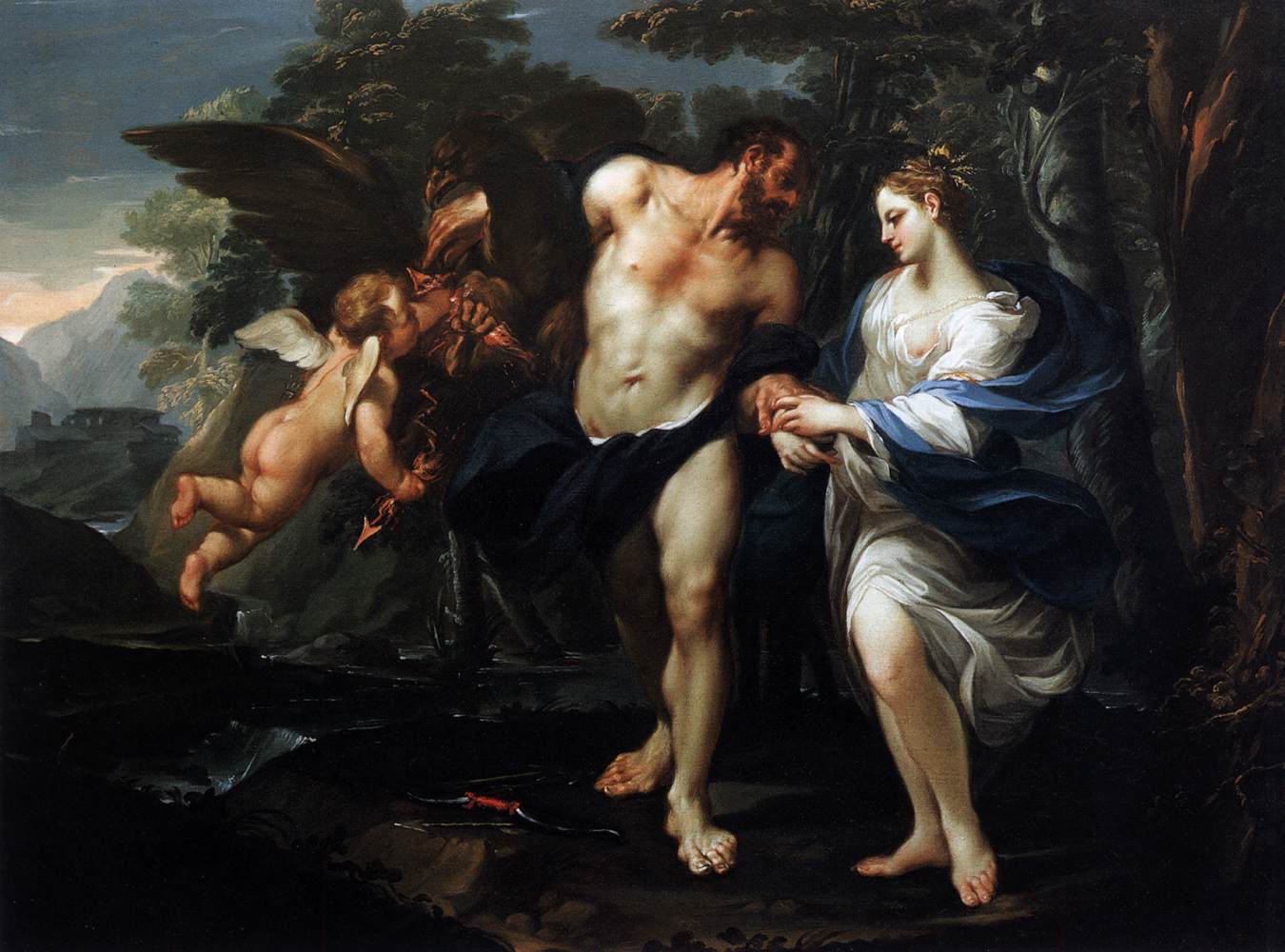
Italian painter, part of a family of painters, son of Giovanni Maria Viani. He trained with his father and in 1691 he made a visit to Venice, which, though lasting less than a year, was of enduring importance. Viani was profoundly influenced by the great masters of the 16th century, notably Tintoretto and Veronese, and by his contemporaries, especially the tenebrosi Antonio Zanchi and Antonio Molinari. During the 1690s he worked principally for the Servite Fathers, first in Bologna, where he frescoed one of the lunettes in the portico of their church on the Strada Maggiore, and later at Imola, where he made a number of paintings (most untraced). In about 1700 he painted a large altarpiece of the Miracle of St Anthony of Padua for the church of Santo Spirito at Bergamo (in situ), shortly after which he returned to Bologna. His main work there was Christ at the Pool of Bethsaida (1701-05; Piacenza, Collegio Alberoni), probably commissioned by Cardinal Ferdinando d'Adda, papal legate to Bologna. This imposing picture shows well the muscularity and turbulent movement of Viani's forms, combining the academic Bolognese tradition of the Carracci and Guercino with the expressive colour of the Venetians. Viani also undertook secular commissions, including a Jupiter and Ceres for the Marchese Ratta, of which a copy was made for Cardinal d'Adda (versions, Vienna, Kunsthistorisches Museum; St Petersburg, Hermitage). In 1705 he developed a malignant illness, probably tuberculosis, which prevented him from working. His last painting, St Pellegrino Laziosi (Bologna, Chiesa dei Serviti, Priory), was completed by his pupil Pier Francesco Cavazza (1677-1733).
View all works →