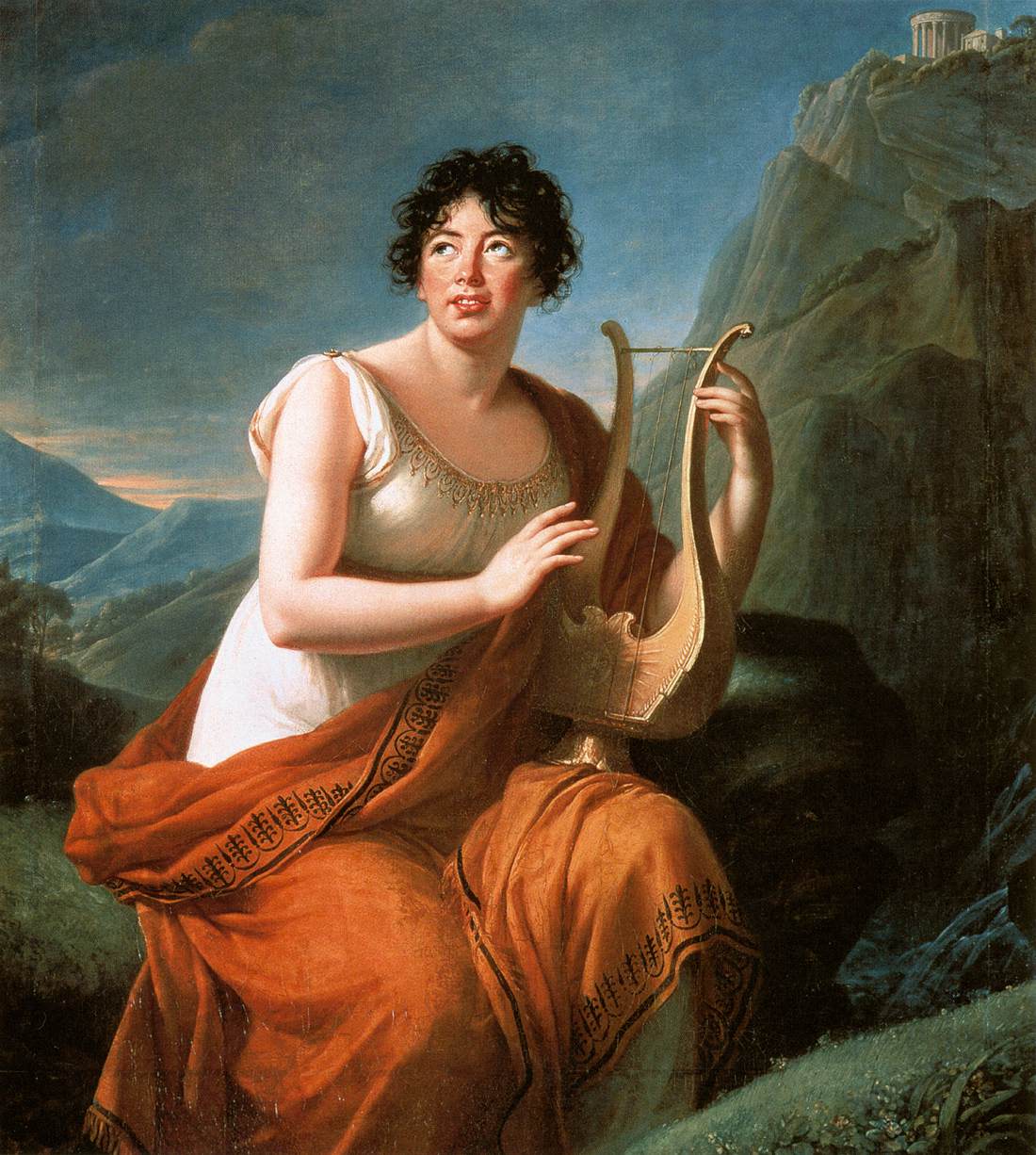
Élisabeth Vigée-lebrun
1755 – 1842
French painter (full name: Marie-Louise-Élisabeth Vigée-Lebrun), one of the most successful of all women artists, particularly noted for her portraits of women. Her father was Louis Vigée, a pastel portraitist and her first teacher. She studied later with a number of well-known painters, among them Jean-Baptiste Greuze and Joseph Vernet. In 1776 she married a picture dealer, J.-B.-P. Lebrun. Her great opportunity came in 1779 when she was summoned to Versailles to paint a portrait of Queen Marie-Antoinette. The two women became friends, and in subsequent years Vigée-Lebrun painted at least 25 portraits of Marie-Antoinette in a great variety of poses and costumes; a number of these may be seen in the museum at Versailles. Vigée-Lebrun became a member of the Royal Academy in 1783. On the outbreak of the Revolution in 1789, she left France and for 12 years traveled abroad, to Rome, Naples, Vienna, Berlin, St. Petersburg, and Moscow, painting portraits and playing a leading role in society. In 1801 she returned to Paris but, disliking Parisian social life under Napoleon, soon left for London, where she painted portraits of the court and of Lord Byron. Later she went to Switzerland (and painted a portrait of Mme de Staël) and then again (c. 1810) to Paris, where she ceased painting. Vigée-Lebrun was a woman of much wit and charm, and her memoirs, Souvenirs de ma vie (1835-37; Reminiscences of My Life), provide a lively account of her times as well as of her own work. She was one of the most technically fluent portraitists of her era, and her pictures are notable for the freshness, charm, and sensitivity of their presentation. During her career, according to her own account, she painted 877 pictures, including 622 portraits and about 200 landscapes.
View all works →