FINDART

Portrait of Ortensia Mancini

Private collection

portrait

Ortensia Mancini (1646-1699), was the fourth of the five celebrated Mancini Sisters (Laure, Olympe, Marie, Marie Anne and Ortensia), daughters of the sister of Cardinal Mazarin, the chief advisor of the young King Louis XIV of France and reputed lover of his mother, Anne of Austria. After their father's death in 1650, the Mancini girls were brought to France by their mother, who hoped that her brother would help find rich and titled husbands for her brood of girls. The five Mancini girls were to become the talk of Paris thanks to their sumptuous dark haired, olive skinned beauty and wild, flamboyant manners, with the young Ortensia (Hortense in Paris), her uncle's favourite niece being the most badly behaved of them all as she grew up into a bold eyed beauty, who was absolutely impossible to resist.
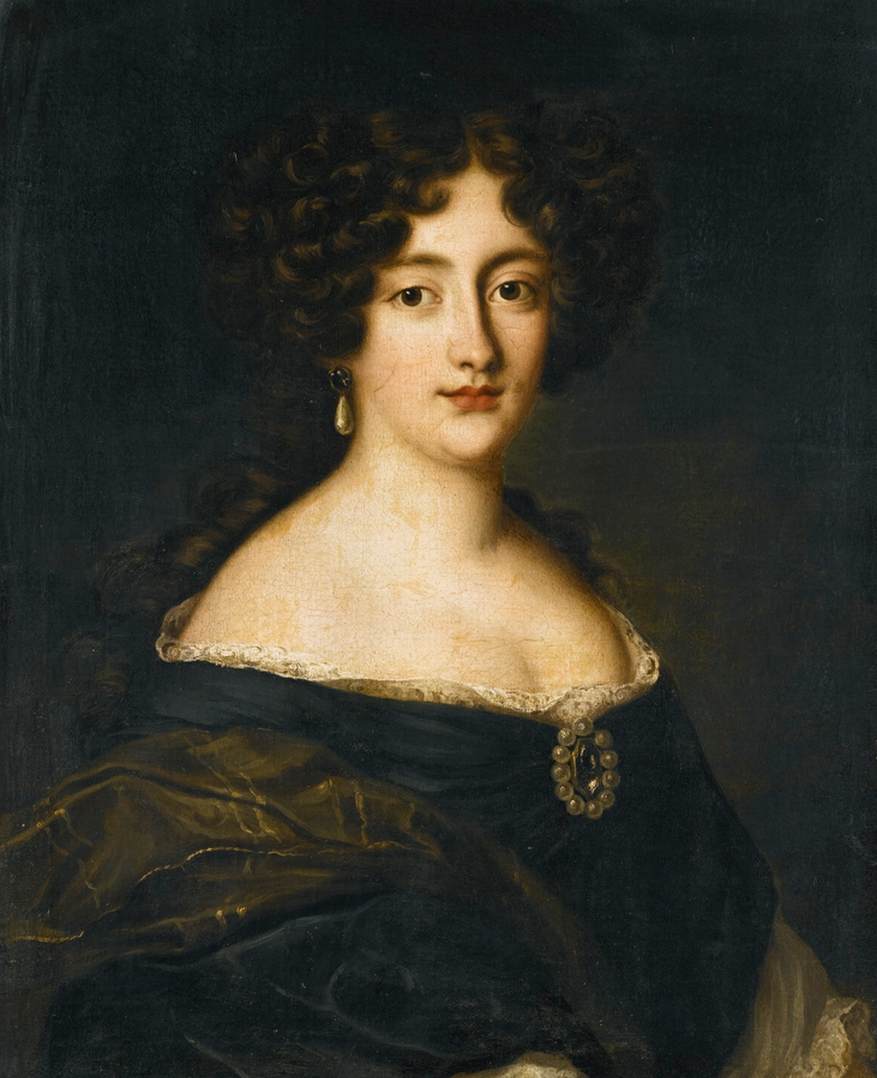
Portrait of Ortensia Mancini

About the Artist

Jacob Ferdinand Voet

16391700

Flemish painter who made his career in Rome in the second half of the 17th century. He was an expert portrait painter who combined solid Flemish professionalism with stylistic features from French and Italian Baroque portraiture. In the history of art, Voet was sinking into undeserved oblivion, until the 1930's. Little is known of Voet's early life in Antwerp. He arrived in Rome in 1663, probably via France. Voet became a much sought-after portrait painter to the Papal court and the Roman aristocracy. He was patronized by Queen Christina of Sweden, who was then resident in Rome, and painted her portrait as well as that of her friend, Cardinal Azzolino. Certain Englishmen who visited Rome on their Grand Tour, also commissioned Voet to paint their portraits. For Roman palaces, Voet painted entire Galleries of Beauties and rows of cardinals. His success in Rome ended in forced exile in 1678, for his brush was an instrument of wantonness. Voet went to France and finally returned to Antwerp. Voet specialized in half-length portraits, in which all attention is concentrated on the subject, who emerges from a neutral, dark background. He was a sophisticated master of his medium, painting with an effortless accuracy and a fluid ease. Voet's subjects tend to have a reflective, sometimes slightly anguished expression. Usually they have very striking, memorable eyes, always large and evocative, sometimes even startling, with a haunting look.

View all works →