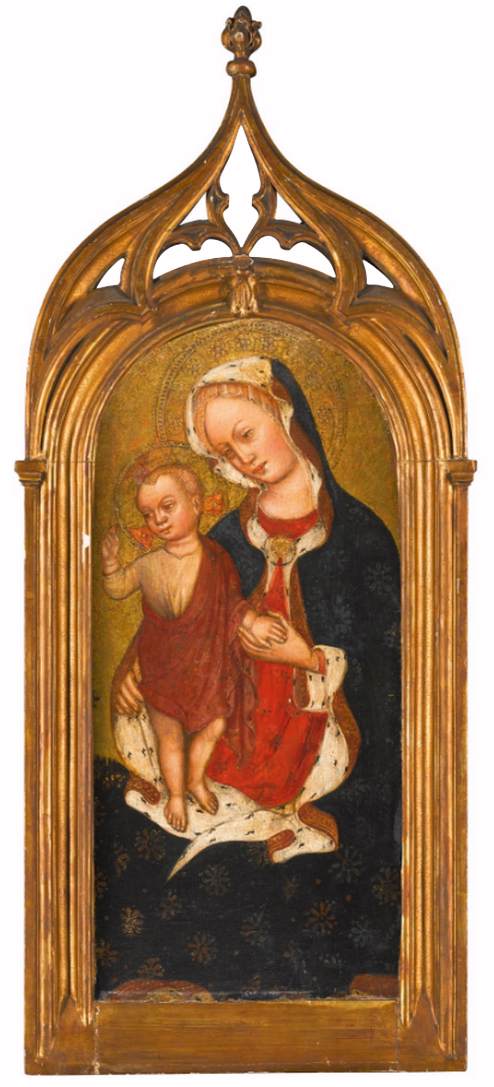
Zanino Di Pietro
? – 1448
Italian painter, known also as Giovanni di Francia or Giovanni di Pietro Charlier. With Niccolò di Pietro and Jacobello del Fiore, Zanino di Pietro was one of the major Venetian painters of the first quarter of the 15th century. His activity in Bologna, repeatedly documented between 1389 and 1406, was of crucial importance for the pungent narrative style and naturalistic details of his earliest signed painting, a folding Crucifixion triptych painted for the Franciscan convent of Fonte Colombo (Rieti, Museo Civico). The inscription describes the artist as h[ab]itator ve[n]eciis i[n] contrata sa[nc]te a[ppol]linaris, and it is therefore datable to c. 1405, when Zanino seems to have moved permanently to Venice. Whether the triptych reflects the work of Gentile da Fabriano, who was active in Venice by 1408, or whether Zanino was instrumental in transmitting an Emilian style to Gentile cannot be answered satisfactorily. The most important commission of his career was that of decorating the façade of the Ca d'Oro in Venice, received shortly after his completion of the pulpit in the church of the Carità in the same city. Zanino's subsequent paintings reveal the influence of both Gentile and Michelino da Besozzo, who was active in Venice by 1410. The most important are two polyptychs in the Museo Diocesano, Camerino, and the Convento del Beato Sante, Mombarroccio, both in the Marches, the iconostasis of Torcello Cathedral and the fresco decoration of the tomb of the Beato Pacifico (1437; Venice, S Maria Gloriosa dei Frari).
View all works →