Sándor Brodszky
1819 – 1901
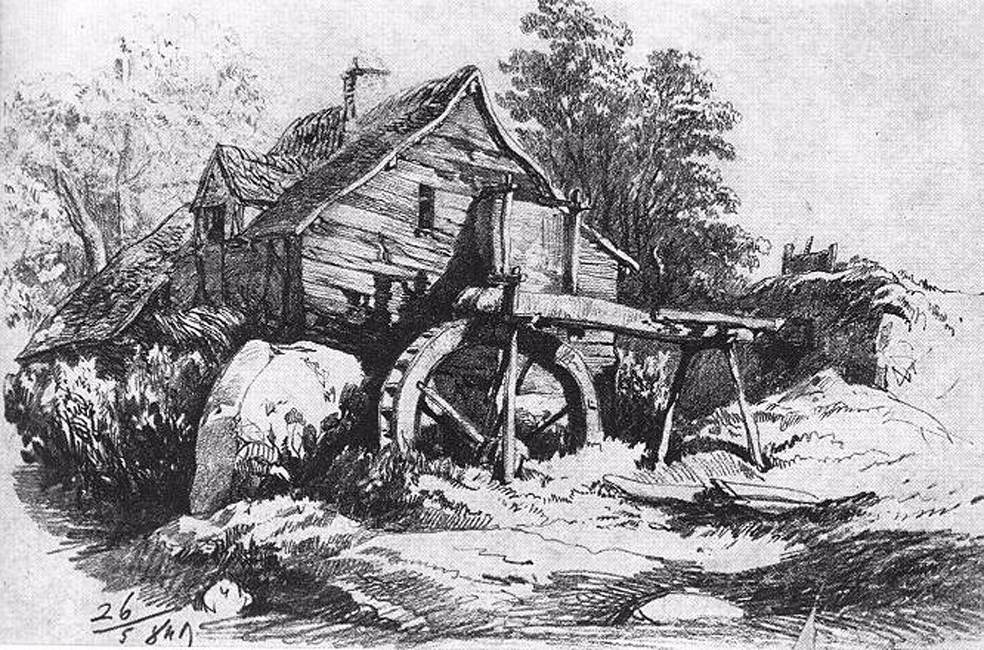
Hungarian painter. He studied medicine in Pest, before moving on in 1841 to the Akademie der Bildenden Künste in Vienna, where he studied painting under Josef Mössmer (1780-1845) and Franz Steinfeld (1787-1868). In 1845 he went to Munich, where he spent ten years, during which time he studied at the Akademie der Bildenden Künste under Albert Zimmermann (1808-88) and Friedrich Voltz (1817-86). His ideal landscape painter, however, was Carl Rottmann. In 1847 he exhibited his painting Solitary Mill (private collection) at the Kunstverein in Munich. He subsequently became a well-known landscape painter. As well as many successful exhibitions in Germany, from 1842 he regularly exhibited landscapes and still-lifes in the annual exhibitions of the Artists' Association of Pest (Pesti Muegylet) and he settled in the capital in 1856. In the same year he painted a view of the Margaret Island (Laxenburg, Royal Collection) for the Emperor Franz Joseph. In 1857 the Hungarian National Museum in Budapest bought three of his newly painted landscapes: Balaton in Storm, Ruins of Sasko and Esztergom and its Surroundings (all Budapest, Hungarian National Gallery). Brodszky's main interest was stormy landscapes and landscapes with ruins. Sometimes he painted Hungarian landscapes with details that were more typical of the Campagna of Rome. His landscapes also included small staffage figures and popular genre scenes, often painted in a Romantic style. After 1870 he was one of the conservative landscape painters in Hungary who preserved the traditions of the artists in Vienna and Munich during the 1840s and 1850s.
View all works →