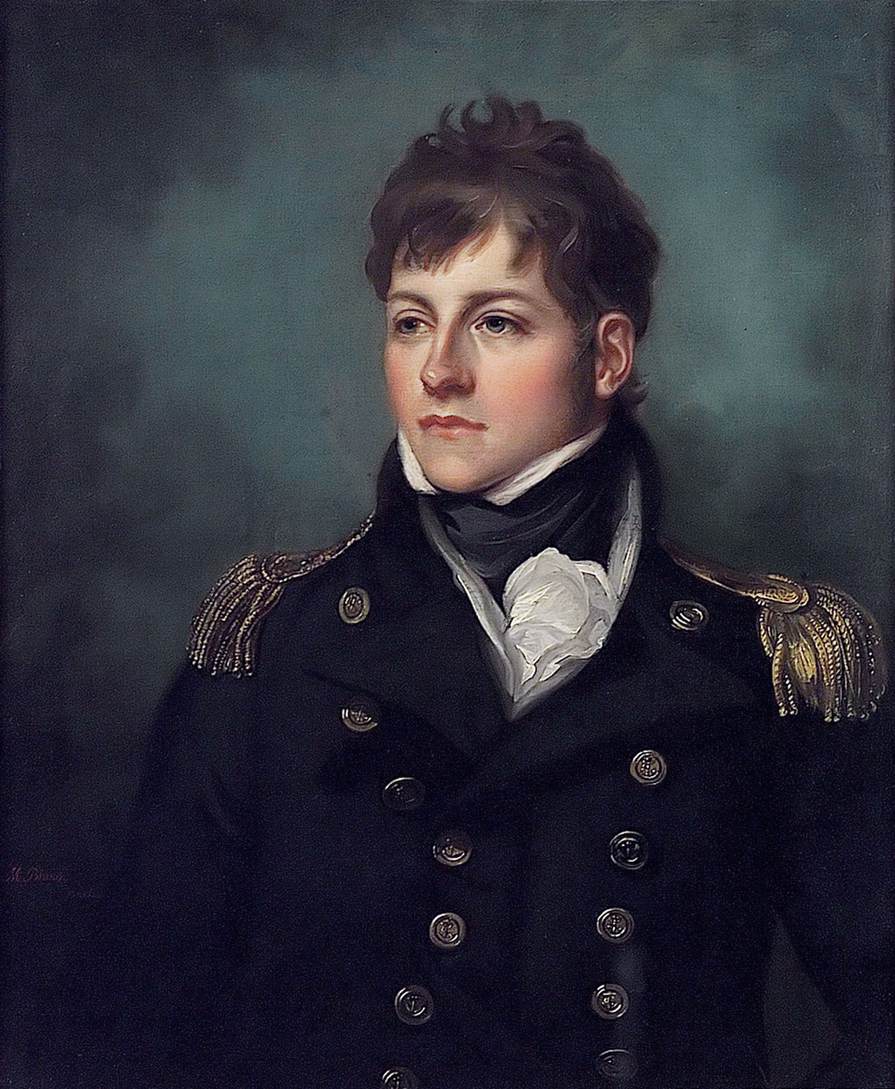
Mather Brown
1761 – 1831
American painter, active in England. He was descended from four generations of New England religious leaders; John Singleton Copley painted portraits of his mother (Yale University, Art Gallery, New Haven) and his maternal grandfather (American Antiquarian Society. Worcester), John Trumbull was his friend and Gilbert Stuart 'learnt me to draw' at age 12. At 16 Brown walked 640 km to Peekskill, NY, and back, selling wine and painting miniature portraits; from these pursuits he earned enough to pay for three years of study in Europe. In London, on Benjamin Franklin's recommendation, Benjamin West accepted him as a free student. Brown was admitted as a student to the Royal Academy in January 1782 and exhibited four paintings the following year. He showed 80 paintings there in all. In 1785-86 he painted much admired portraits of Thomas Jefferson (private collection) and John Adams (untraced; second version, 1788; Boston, Athenaeum) and several of his family. He painted two full-length portraits in 1788 of Frederick Augustus, Duke of York (National Trust, Waddesdon Manor) and the Prince of Wales, later George IV (Royal Collection, Buckingham Palace, London), and in the same year he was appointed historical and portrait painter to the Duke of York. A falling off of patronage in the mid-1790s, and failure to be elected to the Royal Academy, led Brown to leave London in 1808 for Bath, Bristol, and Liverpool. He settled in Manchester, returning to London almost two decades later, in 1824, where, even after West's death, he continued to imitate his teacher's style of painting. Unable to secure commissions, Brown eventually died in poverty in London.
View all works →