Gustave Caillebotte
1848 – 1894
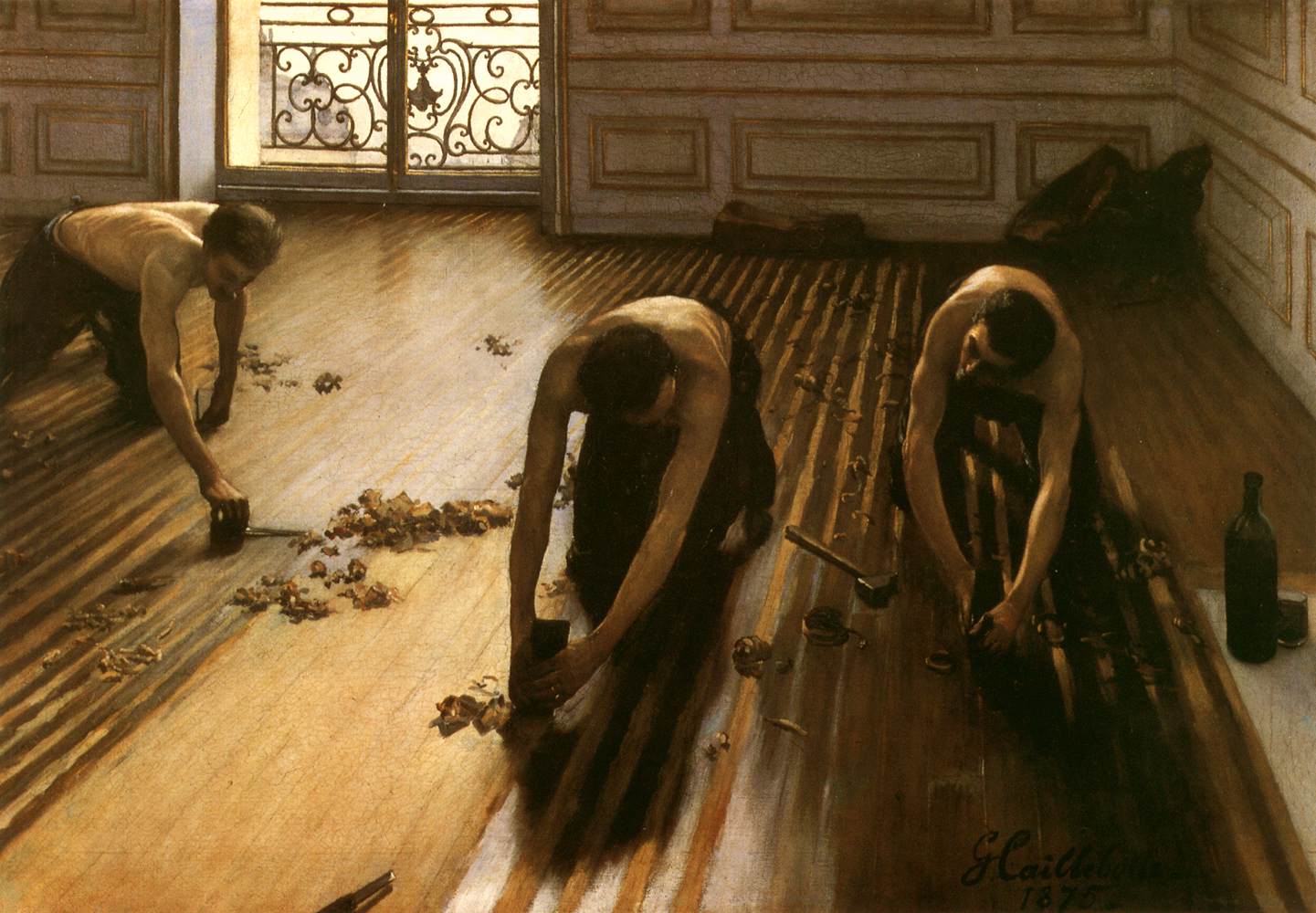
French painter and collector. Caillebotte's parents, of Norman descent, were wealthy members of the Parisian upper middle class, and his paintings often evoke his family background. After studying classics at the Lycée Louis Le Grand, he obtained a law degree in 1870, and during the Franco-Prussian War he was drafted into the Seine Garde Mobile (1870-71). He joined Léon Bonnat 's studio in 1872 and passed the entrance examination for the Ecole des Beaux-Arts on 18 March 1873. The records of the Ecole make no mention of his work there, and his attendance seems to have been short-lived. He was very soon attracted by the innovative experiments, against academic teaching, of the young rebels who were to become known as the Impressionists. In 1874 Edgar Degas , whom Caillebotte had met at the house of their mutual friend Giuseppe de Nittis, asked him to take part in the First Impressionist Exhibition at the Nadar Gallery in the Boulevard des Capucines in Paris. However, it was only at the time of their second exhibition in April 1876 that, at Auguste Renoir 's invitation, Caillebotte joined the Impressionist group. From then on he was one of the most regular participants in their exhibitions (1877, 1879, 1880, 1882). He organized the show of 1877 and made great efforts to restore the cohesion of the group by persuading Claude Monet to exhibit in 1879. Caillebotte painted some 500 works in a style often more realistic than that of his Impressionist friends. The painter will illustrate himself particularly in views of Paris streets made from high balconies, in scenes of working life, natural landscapes of gardens and parks, and in nautical scenes (on the Seine in Argenteuil and Yerres ). Having inherited a large fortune from his parents, Caillebotte had no need to sell his pictures and could afford to provide crucial financial assistance for his artist friends. He purchased their work, much disparaged at the time, and amassed the famous collection of Impressionist masterpieces that he left to the State.
View all works →