Jacob van Campen
1596 – 1657
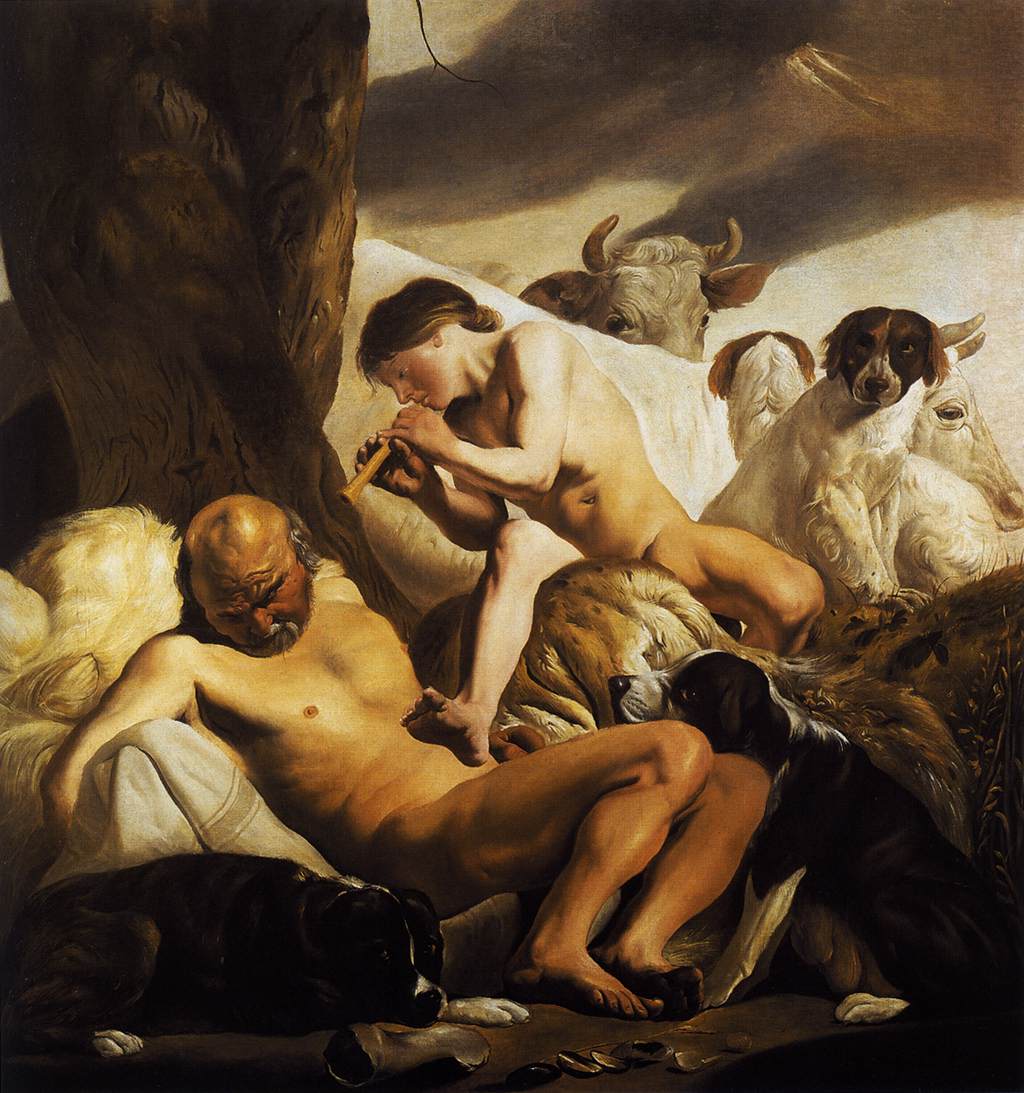
Dutch architect, one of the leaders of a group of architects who created a restrained architectural style that was suited to the social and political climate of the Netherlands. He was born in Haarlem on 2 February 1596 as the son of Gerritge Claes Jansz Berendr and the merchant Pieter Jacobsz. As both his parents' families were wealthy burghers, Van Campen had good connections in the business and cultural worlds of Amsterdam and Haarlem. Nothing is known about his training. He was long thought to have studied under Frans Pietersz de Grebber, and several eighteenth- and nineteenth-century biographers speculated that he had been taught by Peter Paul Rubens. Houbraken mentioned a visit to Italy, but this too remains unconfirmed. In 1614, Van Campen was registered as a master painter with the Haarlem Guild of St Luke. His father died a year later. Following his mother's death in 1625, Jacob, as the eldest son, inherited her family estate, Randenbroek, near Amersfoort. Many subsequent documents refer to him as 'Lord of Randenbroek'. It is not known whether he moved to the estate right away, but he did use it as his base from the early 1630s on. Though he never married, Van Campen had a son, Alexander, whose mother's name is unknown. In 1625, Jacob van Campen received his first commission for a building in Amsterdam. It was the first of many major projects, for which his influential relatives were partly to thank. His most prestigious commission was the Town Hall in Dam Square, Amsterdam, whose cornerstone was laid in 1648. In 1654, however, Van Campen abandoned the project following a dispute with the Amsterdam burgomasters, and subsequently returned to Randenbroek. His friendship with Constantijn Huygens, which started in 1632, also brought numerous commissions. Van Campen assisted Huygens in building his own house (1634-1637), and designed the Mauritshuis (1634-1644) for Johan Maurits van Nassau-Siegen, with whom he was also on friendly terms. Through Huygens, who was secretary to the stadholder Frederik Hendrik, Van Campen received commissions for the court. He designed the decoration programmes for several palaces belonging to the stadholder and, in collaboration with Huygens, supervised the decoration of the Oranjezaal in Huis ten Bosch from 1647 to 1652. Van Campen also remained active as a painter, one of his major projects being the canvases he executed for Huis ten Bosch. He was one of the team, including Jordaens and Lievens, who worked on the decoration of Huis ten Bosch, the royal villa on the outskirts of The Hague.His extant oeuvre is small, however, so he was presumably not prolific in this field. His early works in particular reflect an affinity with paintings by the Utrecht Caravaggists. Van Campen must have had connections in Utrecht, although there is no record of his having lived there.
View all works →