Niccolò dell' Abbate
1509 – 1571
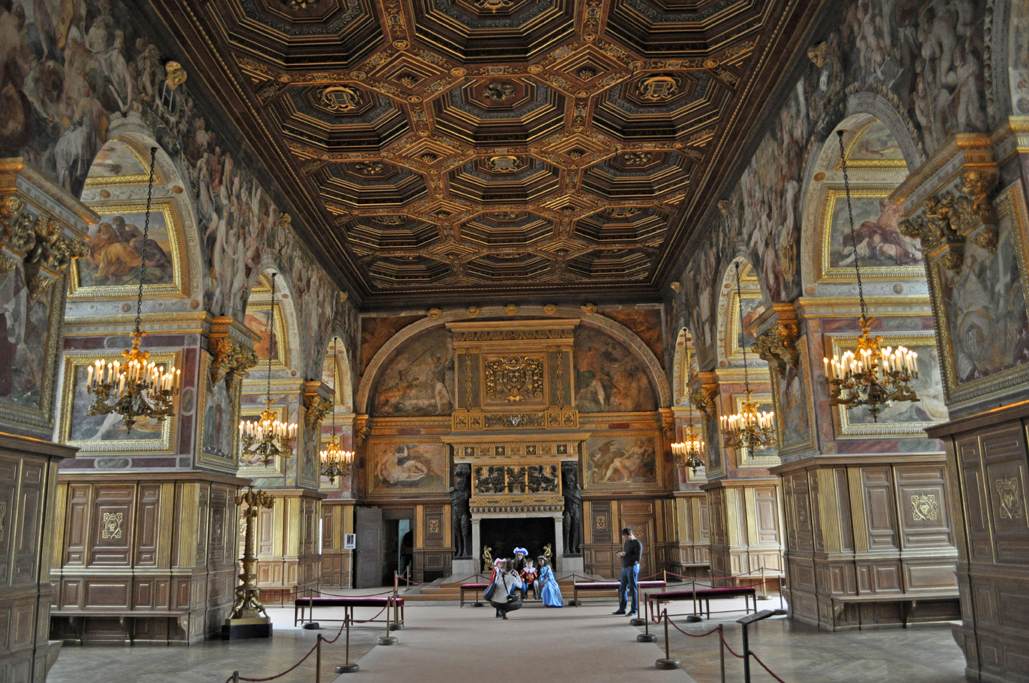
Painter of the Bolognese school who, along with others, introduced the post-Renaissance Italian style of painting known as Mannerism to France and helped to inspire the French classical school of landscape painting. He began his career in Modena as a student of the sculptor Antonio Begarelli. His "Martyrdom of St. Peter and St. Paul" in the church of S. Pietro, Modena (1547), probably established his reputation. During his stay in Bologna (1548-52), his style matured, influenced by his contemporaries Correggio and Parmigianino. His stucco-surface landscapes in the Poggi (now Palazzo dell'Università) survive to show his understanding of nature. In 1552 Abbate was called to the court of the king of France, Henry II, at Fontainebleau, and remained in France for the rest of his life. With Francesco Primaticcio he composed immense murals, most of them later lost. His easel works, which included an enormous number of lyrical landscapes based upon pagan themes, were burned in 1643 by the Austrian regent, Anna. Among his later paintings executed for Charles IX were a series of landscapes with mythologies that influenced the 17th-century French painters Claude Lorrain and Nicolas Poussin. He also designed a series of tapestries, "Les Mois arabesques," and some of his designs were adopted by the painted enamel industry of Limoges. His last works are believed to be 16 murals (1571) in which he was assisted by his son, Giulio Camillo. His work in France is recognized as a principal contribution to the first significant, wholly secular movement in French painting, the Fontainebleau style.
View all works →