Alonso Cano
1601 – 1667
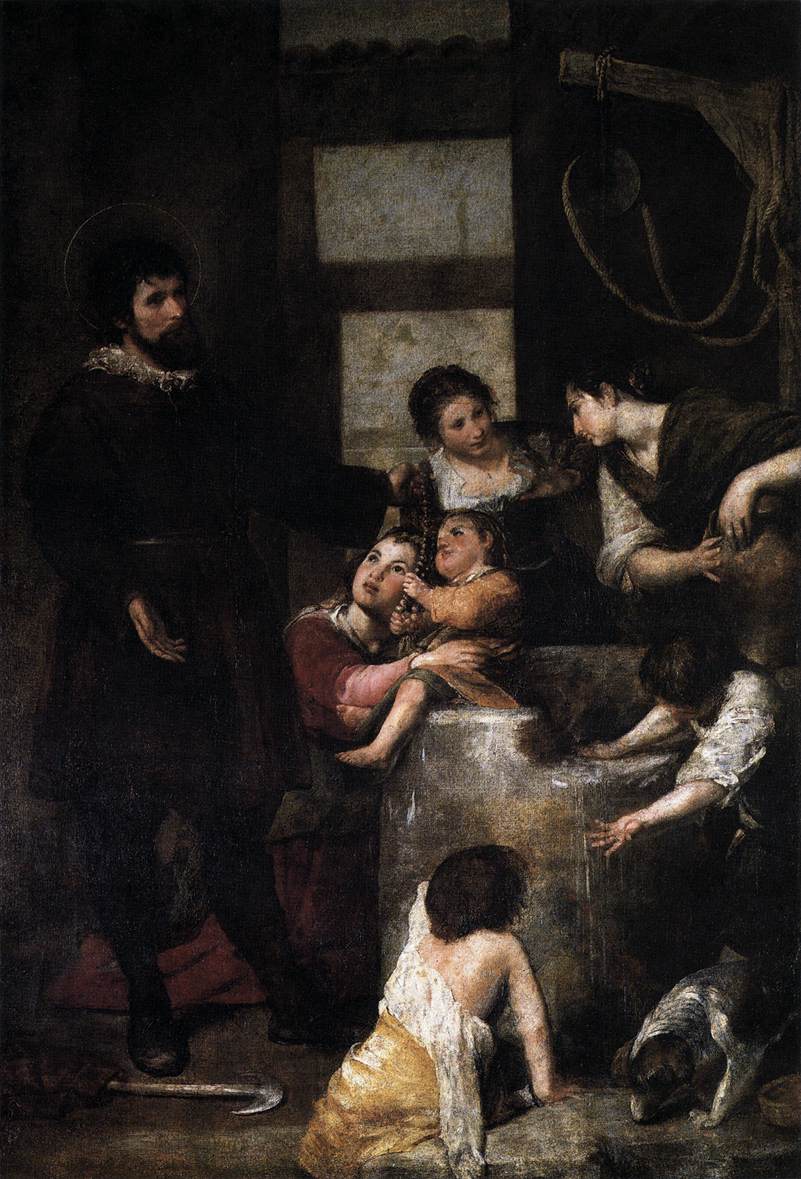
Spanish sculptor, painter, architect, and draughtsman, sometimes called "the Spanish Michelangelo" because of the diversity of his talents. He was born and died in Granada, and worked there and in Seville and Madrid. His movements were partly dictated by his tempestuous character, for more than once he fled or was expelled from the city he was working in (once for the suspected murder of his wife). In spite of his violent temperament, his work tends to be serene and often sweet. He studied painting in Seville with Pacheco ( Velázquez was his fellow-student) and sculpture with Montáez, and stayed in the city from 1614 to 1638, when he moved to Madrid to become painter to the Count-Duke Olivares and was employed by Philip IV to restore pictures in the royal collection. Thus he became acquainted with the work of the 16th-century Venetian masters, whose influence is apparent in his later paintings; they are much softer in technique than his earlier pictures, which are strongly lit in the manner of Zurbarán. From 1652 he worked mainly in Granada, where he designed the façade of the cathedral (1667), one of the boldest and most original works of Spanish Baroque architecture. He was ordained a priest in 1658, as this was necessary for him to further his career at Granada Cathedral. The cathedral has several of Cano's works in painting and sculpture, including a polychrome wooden statue of the Immaculate Conception (1655) that is sometimes considered his masterpiece.
View all works →