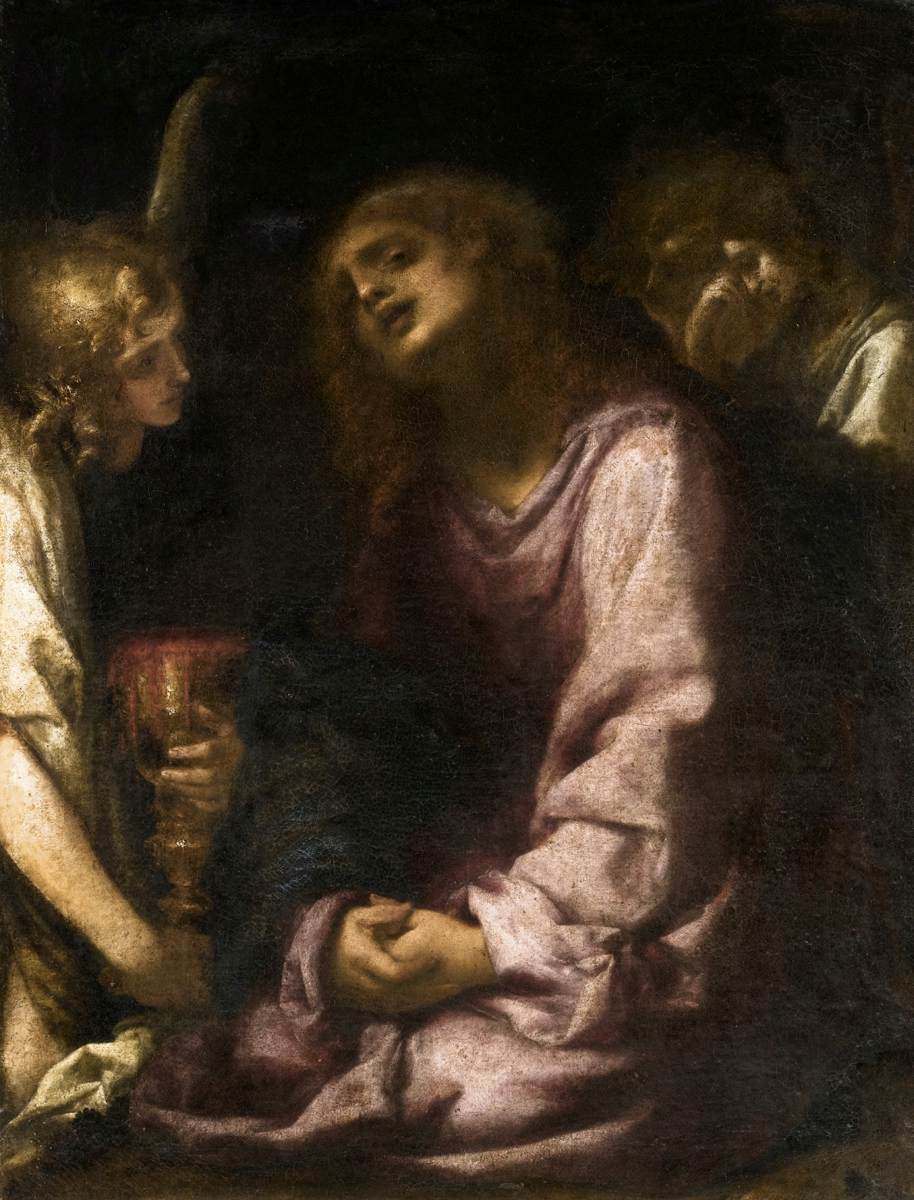
Cecco Bravo
1601 – 1661
Italian painter and draughtsman, originally Francesco Montelatici. Late 20th-century scholarship has nominated him the most original and exploratory Florentine painter of the 17th century. He learnt the fundamentals of his drawing technique from Giovanni Bilivert and was also close to Sigismondo Coccapani (1583-1642). In the early 1620s he took part in the vast collective projects carried out under the direction of Matteo Rosselli and by 1629 was the head of a workshop. His first recorded works, the fresco of the Virgin, St John and Angels (c. 1628/9; Florence, San Marco) and Charity (Florence, Santissima Annunziata), show his close study of the Florentine tradition from Andrea del Sarto to Pontormo. In 1633 he painted six lunettes with scenes from the Life of the Blessed Bonaventura Bonaccorsi (Pistoia, Santissima Annunziata), continuing a series begun in 1601 by Bernardino Poccetti but with a livelier rhythm. The vein of caricature in these paintings appears more strongly in the frieze depicting Children's Games (c. 1631; Impruneta, Villa Mezzamonte). His depiction of illustrious Tuscans (1636; Florence, Casa Buonarroti), later completed by Domenico Pugliani and Rosselli, shows a particular sensitivity to landscape, built up with rapid brushstrokes in an almost Impressionistic manner. He was commissioned to complete work initiated by Giovanni da San Giovanni (who died after starting) for the Sala degli Argenti in Palazzo Pitti, in a commission shared with Ottavio Vannini and Francesco Furini. The frescoes, intended to celebrate Lorenzo de' Medici, were commissioned in 1635 by Ferdinando II de' Medici prior to his marriage to the daughter of the Duke of Urbino. In the south wall, Bravo completed Lorenzo as messenger of peace. In 1659, Cecco was recommended by the Cardinal Leopoldo de' Medici for a position as a court painter to Anna, wife of the archduke of Ferdinand Karl of the Tyrol. He accepted and spent the last two years of his life in Innsbruck.
View all works →