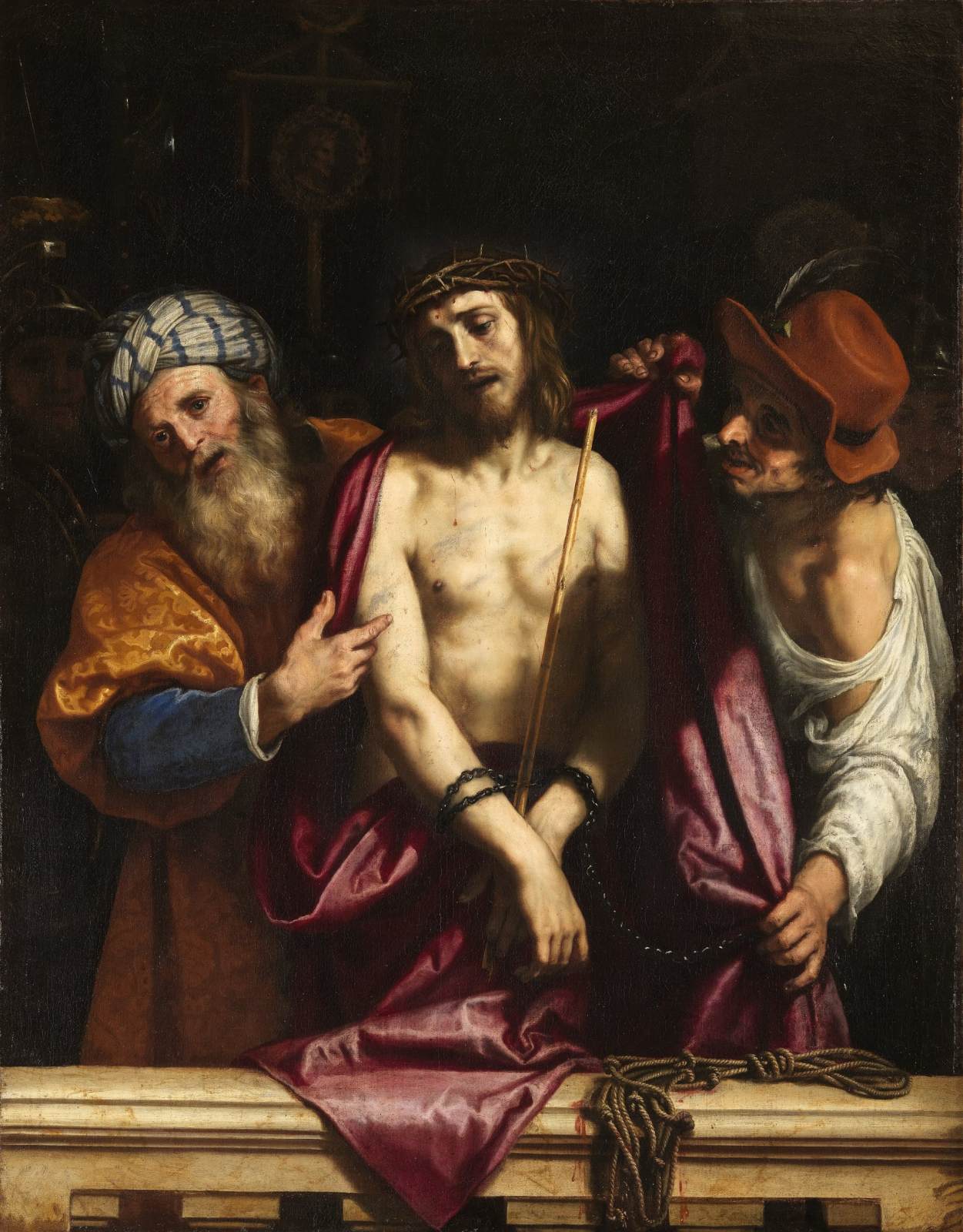
Cigoli
1559 – 1613
Cigoli (Lodovico Cardi), Florentine painter, architect, and poet. He was the outstanding Florentine painter of his generation and his work represents the complex stylistic cross-currents in the period of transition from Mannerism to Baroque . A key figure in the development of Baroque in Florence, Cigoli also played an important role in seventeenth-century Rome. After studying with the Florentine painters Alessandro Allori and Santi di Tito and the architect Bernardo Buontalenti, Cigoli received numerous Medici commissions, including designs for the pageant held on the occasion of Grand Duke Ferdinand I's marriage to Maria Christina of Lorraine in 1589. Cigoli's paintings of the 1590s, such as Heraclius Carrying the Cross (1594; San Marco, Florence) and The Martyrdom of St Stephen (1597; Galleria Palatina, Florence) reveal a new naturalism and clarity of composition, heralding in Florence a reform of the prevalent Mannerist style similar to that undertaken by the Carracci in Bologna. In 1604 Cigoli was summoned to Rome to paint St Peter Healing the Cripple for St Peter's (1604-06; fragments in crypt), a masterpiece on slate praised by Andrea Sacchi as the third greatest painting in Rome, after Raphael's Transfiguration and Domenichino's Last Communion of St Jerome. During the last decade of his life Cigoli frequently participated in important decorative enterprises in Rome. These included The Virgin of the Immaculate Conception in the dome of the Cappella Paolina in Santa Maria Maggiore (1610-13), painted for Pope Paul V, and a fresco cycle, depicting Psyche and Cupid, in the casino of Cardinal Scipione Borghese's palace on the Quirinal hill (1611-13; now in the Museo di Roma, Palazzo Braschi, Rome). In 1613, only a month before his death, Cigoli was made a knight of the Order of Malta.
View all works →