Niccolò Circignani
1517 – 1596
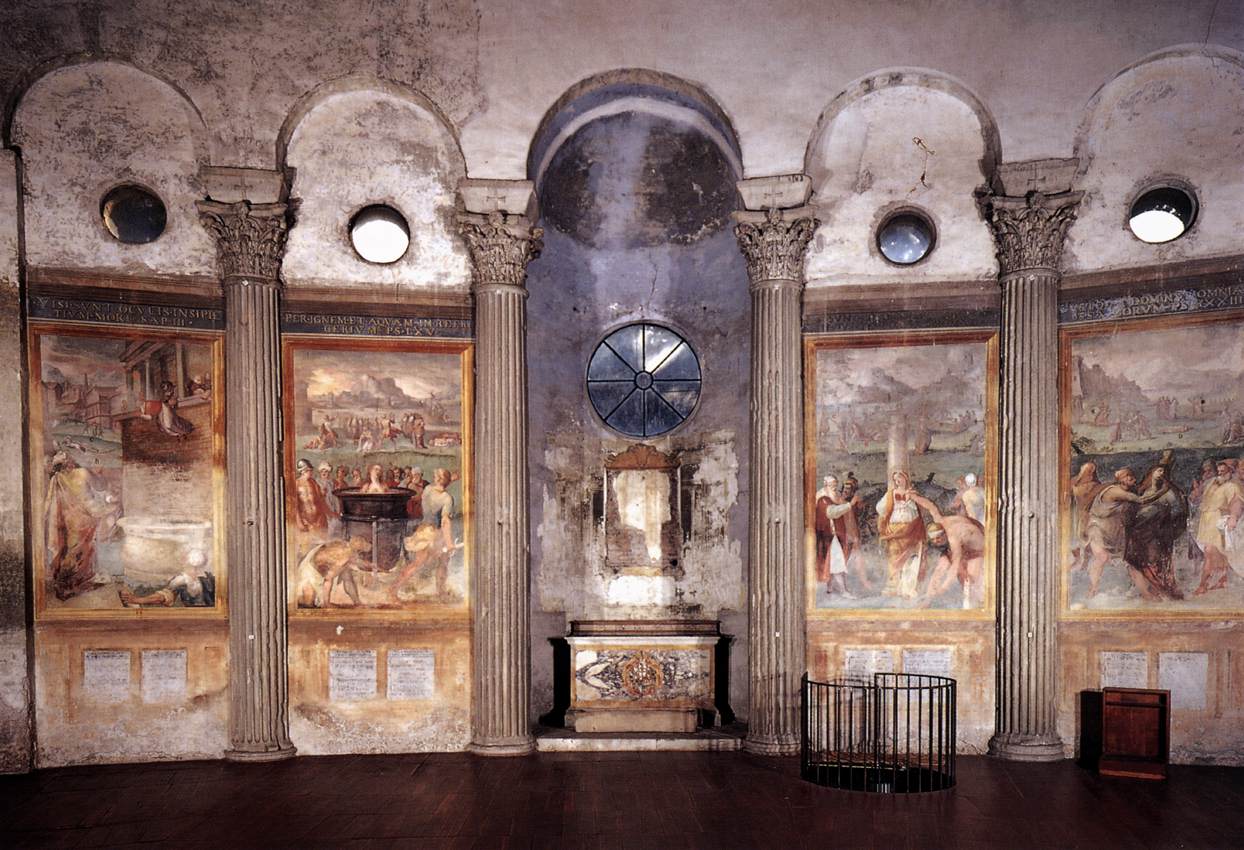
Niccolò Circignani (also Niccolò Pomarancio), Italian painter. He may have been a pupil of Daniele da Volterra and later of Santi di Tito. In 1564 he was in Rome working on frescoes of Old Testament narratives in the Sala Grande of the Vatican Belvedere. Next, in Perugia, he formed a partnership with Hendrick van den Broeck and in 1565 replaced him in the painting of frescoes (destroyed) for Orvieto Cathedral. His paintings of this period - including the frescoes (1568) in the church of the Maestà delle Volte, Perugia, the Resurrection (1569; Mongiovino, Sanctuary) and the Annunciation (1577; Città di Castello, Pinacoteca Comunale) - are strongly influenced by late Florentine and Roman Mannerism. From 1579 he was again in Rome, working in the Vatican, where, with Matthijs Bril, he decorated the Sala della Meridiana in the Torre dei Venti (finished before the end of 1580) and supervised works on the third floor of the Logge (1580-83). In 1581-82 he executed huge fresco cycles in Sant'Apollinare and San Stefano Rotondo, Rome, following the didactic style recommended in the post-Tridentine treatise of Gabriele Paleotti. In scenes of great emotional impact Pomarancio depicted the tortures of Christian martyrs with insistent emphasis on the cruel details. His next works - frescoes in the chapel of S Francesco Borgia at Il Gesu (1584-87), the Angelic Concert with the Eternal Father in SS Giovanni e Paolo and the Celestial Glory in S Pudenziana, all in Rome - show a stylistic evolution from late Roman Mannerism towards a more unified and monumental type of composition. His last work, the Ascension (Cascia, S Francesco), is dated 1596.
View all works →