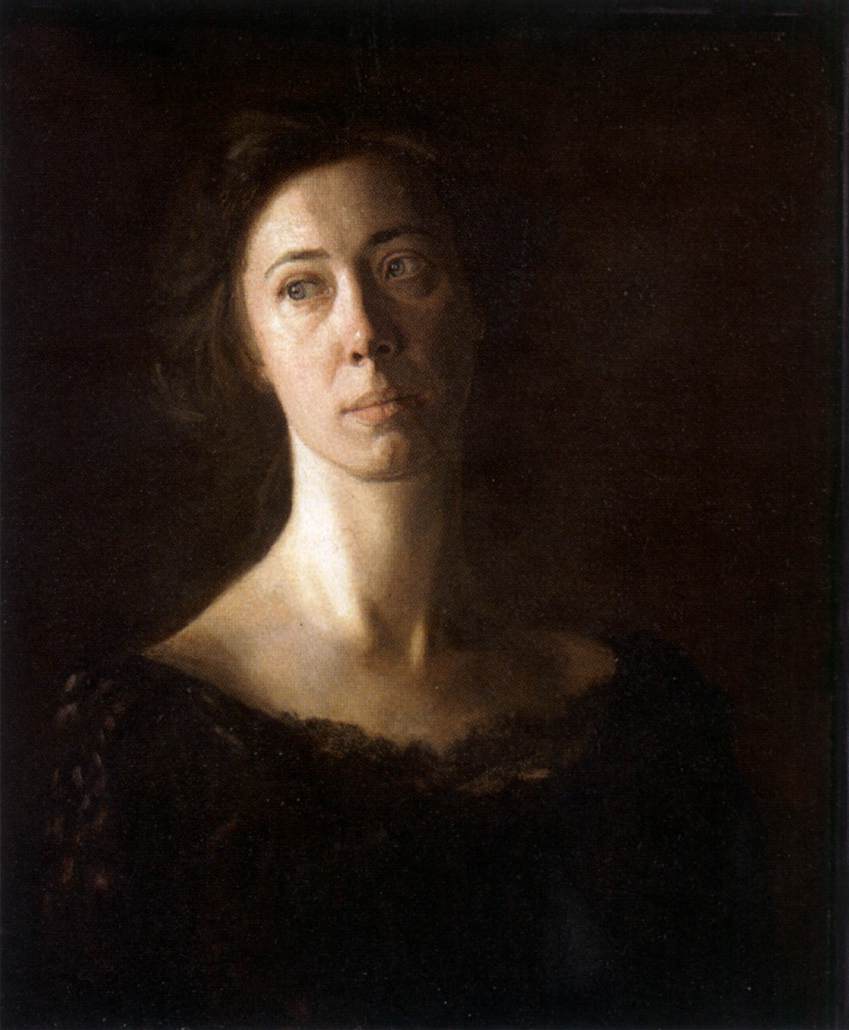
Thomas Eakins
1844 – 1916
American painter, photographer, and sculptor, best known for his precise, exacting paintings in the tradition of the Barbizon School and Velázquez. He studied with Gérome and others in Paris from 1866-1869, but returned to Philadelphia in 1870 where he painted local figures and scenes that emphasized emotional truth and visual fact. He visited Spain, where he was drawn to the works of Velázquez. His interest in science led to probably his best-known painting, The Gross Clinic (1875), showing the famous surgeon in the operating theater. The picture shocked contemporaries with its frank depiction of blood. Eakins taught at the Philadelphia Academy of the Arts from 1876-1878, reforming the teaching methods and giving priority to painting from live nude models as oppose to drawing from plaster casts. He was forced to resign in 1886 for working with nude models in mixed classes. In addition to numerous portraits, he painted boating and other outdoor scenes that reflect his fascination with the human body in motion. Eakins was one of the first American photographers to explore the nude, in anatomy and motion studies and artistic studies of the human form. The latter often reflected a latent sexuality, which, along with his reliance on nude models in teaching, precipitated the scandals that plagued his life. Although he never achieved commercial success during his lifetime because of his realism and his resistance to prevailing genteel cosmopolitanism, Thomas Eakins was arguably the finest nineteenth-century American painter.
View all works →