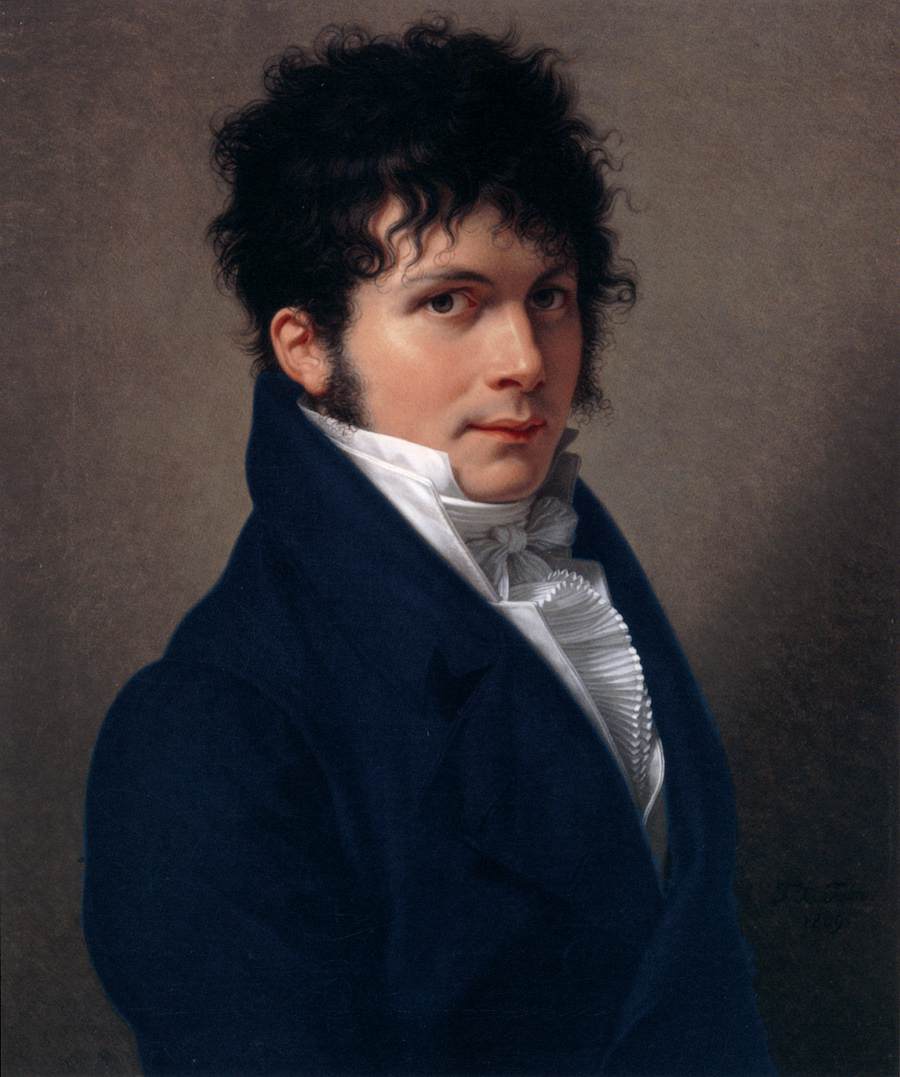
François-Xavier Fabre
1766 – 1837
French painter, printmaker and collector. He was taught by the painter Jean Coustou (1719-91) in Montpellier before entering, in 1783, the studio of David, to whose artistic principles he remained faithful all his life. His career as a history painter began brilliantly when, in 1787, he won the Prix de Rome for Nebuchadnezzar Ordering the Execution of Zedekiah's Children (Paris, Ecole Normale Supérieur des Beaux-Arts). This early success was consolidated by the four years he spent at the Académie de France in Rome and by the enthusiastic reception of his Death of Abel (1790; Montpellier, Musée Fabre) at the Salon of 1791. Upheavals in revolutionary France and Fabre's monarchist sympathies kept him in Italy for much of his life. Moving to Florence in 1793, Fabre found patrons in Italian aristocrats and tourists who appreciated the elegance, realism, and precision of his portraits. As a member of the Florentine academy and an art teacher, art collector, and art dealer, Fabre was prominent in Florentine society. Changing fashions, lack of patrons' interest, and gout caused him to abandon history painting for portraiture, landscape, and printmaking, though he remained a lifelong devotee of David's Neoclassicism. In 1824 his companion, the countess of Albany, died and left Fabre her fortune. Returning to France, Fabre increasingly dedicated himself to his hometown of Montpellier, founding an art school and curating his donations of books, paintings, drawings, and artworks. The Musée Fabre was inaugurated on his feast day in 1828.
View all works →